
Autonomous AI systems are just getting started — and the lab leading their development has a vision that stretches far beyond anything the industry has attempted before.
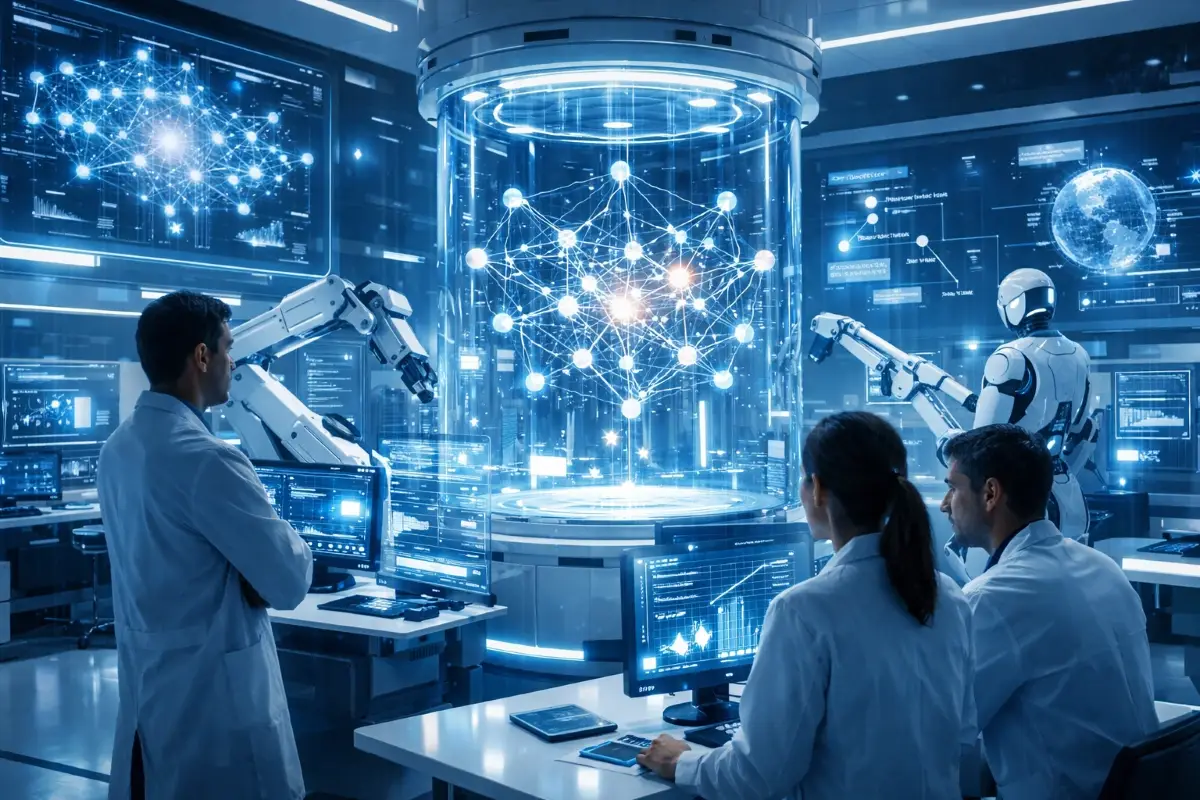
there is a moment in the development of every transformative technology when it stops being a tool and starts being a participant. The steam engine didn’t just power machines — it reorganized economies. The internet didn’t just connect computers — it redefined how human knowledge flows. We are standing at exactly that threshold with artificial intelligence, and Google DeepMind may be the organization most aggressively and most deliberately pushing us across it.
The term “autonomous AI systems” sounds like science fiction. It isn’t. It describes something precise and rapidly evolving: AI that can pursue goals over extended periods, adapt when circumstances change, use tools it was never explicitly taught to use, and improve its own performance without human instruction at every step. The shift from reactive AI — systems that answer when asked — to proactive, autonomous agents is not incremental. It is categorical. And it is happening now.
This article maps that transformation: what autonomous AI actually means, why Google DeepMind is uniquely positioned to lead it, what breakthrough technologies are making it possible, and what all of it means for how we work, discover, and build in the decade ahead.
What Are Autonomous AI Systems?
Autonomous AI systems are artificial intelligence systems that can operate independently, make decisions, and take actions without constant human intervention. Unlike traditional software that follows fixed rules, these systems perceive, reason, and act dynamically based on goals and real-time data.

From Assistants to Independent Agents
The chatbots and recommendation engines that defined the first wave of consumer AI shared one essential characteristic: they waited. You asked a question; they answered. You made a request; they responded. The loop began with you and ended with you. The AI was a very sophisticated mirror — reflecting your query back as a shaped output, then going dormant.
Autonomous systems break this pattern entirely. Instead of responding to a single input, they receive a goal — broad, high-level, often ambiguous — and navigate toward it independently. They decompose the goal into subtasks, identify what information or tools they need, execute those subtasks in sequence or in parallel, evaluate the results, and adjust course when something goes wrong. The human doesn’t manage each step. The human sets the destination.
The practical implications are enormous. The difference between “summarize this document” and “monitor all regulatory filings in this sector, flag relevant changes, draft a briefing for our legal team, and schedule a review meeting” is not just a difference in complexity. It is a difference in kind — and the second task is now within the reach of well-designed autonomous AI agents.
Key Capabilities That Define Autonomy
Autonomy isn’t a single feature—it’s a stack of tightly integrated capabilities that allow an AI system to operate independently, reliably, and purposefully. Below are the core capabilities that distinguish truly autonomous systems from basic automation.
Google DeepMind’s Vision for the Future of AI
Google DeepMind—formed by merging DeepMind and Google Brain—has a clear, ambitious objective:
Build Artificial General Intelligence (AGI) that is safe, beneficial, and widely useful.
Led by Demis Hassabis, the organization is shaping a future where AI systems move beyond narrow tools into general-purpose, autonomous, and collaborative intelligence.
Moving Beyond Narrow Intelligence
For its first decade, AI progress was primarily a story of narrowness. Systems became extraordinarily capable — but at single, well-defined tasks. A chess engine that could defeat any human player was useless at Go. A protein-structure predictor couldn’t write code. A language model couldn’t reason about images. Each system was a specialist, brilliant in its domain and blind outside it.
Google DeepMind’s thesis, developed across years of research and now increasingly visible in its products, is that this era is ending. The future belongs to systems capable of genuine generalization — AI that can transfer reasoning skills across domains, apply knowledge from one field to problems in another, and engage with novel situations it has never encountered during training. This is the direction Demis Hassabis and the DeepMind leadership team have called “the path to AGI” — not a single breakthrough, but a progressive expansion of the range over which AI can think.
Real-World Problem Solving at Scale
DeepMind’s ambitions are explicitly scientific. Where other labs have focused primarily on commercial applications, DeepMind has consistently argued that AI’s highest value lies in accelerating humanity’s understanding of the world — in the hardest problems, not the most profitable ones.
In healthcare, DeepMind’s systems are being applied to disease diagnosis, drug target identification, and genomic analysis at a scale no human team could match. In climate science, AI-driven modeling is improving the resolution and accuracy of climate projections, enabling better planning for adaptation. In fundamental research — chemistry, physics, materials science — autonomous AI agents are beginning to propose and evaluate hypotheses, compressing research cycles that once took years into months or weeks.
DeepMind’s AlphaFold — the system that predicted the three-dimensional structure of virtually every known protein — is perhaps the most dramatic example of this ambition realized. What it accomplished in months had been described by biologists as a 50-year problem. It is now a baseline, not a ceiling.
The Role of Models Like Gemini
Gemini, Google DeepMind’s flagship model family, represents its most direct answer to the question of what general-purpose AI looks like in practice. Built natively multimodal — capable of reasoning across text, images, audio, video, and code simultaneously — Gemini is designed not as a language model with vision bolted on, but as a system that perceives the world across modalities as a unified whole.
The implications for autonomy are significant. An agent that can read documents, interpret diagrams, watch video, analyze code, and generate outputs across all those modalities is far more capable than one that works in text alone. It can engage with the world as it actually exists — richly, messily, multimodally — rather than in the sanitized text representations that earlier systems required.
Breakthrough Technologies Powering Autonomous AI
Breakthrough technologies are rapidly enabling the rise of autonomous AI systems by combining advances in Deep Learning, Transformer Architecture, and Reinforcement Learning. Large-scale models can now understand context, reason across tasks, and generate actions, while reinforcement learning enables goal-driven decision-making in dynamic environments. Additionally, innovations in multimodal AI, real-time data processing, and tool integration allow these systems to interact with the world more effectively. Together, these technologies form the foundation for AI that doesn’t just analyze information—but independently plans, decides, and acts.

Reinforcement Learning and Self-Training Systems
Reinforcement learning is, in essence, the science of learning by doing. Rather than training on static datasets labeled by humans, RL systems interact with environments, receive feedback on the outcomes of their actions, and adjust their behavior to maximize long-term reward. It is the closest analog in machine learning to how humans learn complex motor and strategic skills.
DeepMind has been at the frontier of RL research since AlphaGo — the system that defeated the world champion Go player in 2016 by discovering strategies no human had ever conceived. The lessons from that work have been generalized: RL is now a central tool in training systems that must operate in dynamic, unpredictable environments where the right action depends on context rather than on a memorized pattern.
The most recent advance is self-play and self-critique at scale: systems that generate their own training signal by evaluating outputs, running simulations, or engaging in debate with other instances of themselves. This reduces dependence on human-labeled data and opens paths to improvement that compound over time.
Multimodal AI and World Understanding
The world does not come in text format. Humans understand it through sight, sound, touch, and language simultaneously — and our intelligence is inextricably bound to that multimodal perception. Building AI that truly understands the world, rather than approximates it through language, requires systems that can integrate information across all these channels.
DeepMind’s research into multimodal architecture — how to fuse representations from different input types into coherent, unified reasoning — is producing AI that engages with images, videos, and real-world sensory data in ways that qualitatively expand what it can do. An autonomous agent that can watch a video tutorial and then perform the task it demonstrates, or read a scientific paper and design a follow-up experiment, operates at a different level of capability than a text-only system. This is the direction the field is moving — and DeepMind is setting the pace.
Long-Term Memory and Planning
One of the most significant limitations of early language models was their statelessness. Every conversation started fresh. The model had no memory of what it had done before, no persistent model of the world it was operating in, and no ability to plan over time horizons longer than a single context window. For truly autonomous agents, this is a critical deficiency.
The architecture work underway at DeepMind — and increasingly shipping in Gemini-based products — addresses this directly. Agents with persistent memory can accumulate knowledge across sessions, track the progress of long-running tasks, maintain models of the users and environments they work with, and plan actions across days or weeks rather than seconds. This is what transforms a capable AI assistant into a genuine autonomous collaborator.
Real-World Applications Already Emerging
It is easy to discuss autonomous AI in the abstract. The concrete is more clarifying — and more immediate than most people expect.
Why This Changes Everything
How Businesses and Individuals Should Prepare
What Comes Next: The Road Ahead
Towards Artificial General Intelligence (AGI)
Google DeepMind’s leadership has been more willing than most to discuss AGI — artificial general intelligence, a system capable of performing any intellectual task a human can — as a realistic near-term target rather than a distant abstraction. Demis Hassabis has described it as one of the most important and consequential goals in human history. The lab’s research agenda, from generalist agents to self-improving systems, is coherently oriented toward this target.
What AGI actually means in practice — and whether current architectural directions can reach it — remains genuinely uncertain. What is less uncertain is the direction of travel. Each generation of Gemini is more general, more capable across domains, and more autonomous than the last. The trajectory is clear, even if the destination timeline is not.
Collaboration Between Humans and AI
The most likely near-term future is not one where AI replaces human intelligence, but one where human and artificial intelligence operate in tight collaboration — each doing what it does best. AI handles the execution of complex, well-defined tasks at scale; humans provide the judgment, values, creativity, and contextual wisdom that AI still lacks. DeepMind’s research into hybrid intelligence systems — how to design interfaces and architectures that enable fluid collaboration between human and machine cognition — points toward this future deliberately.
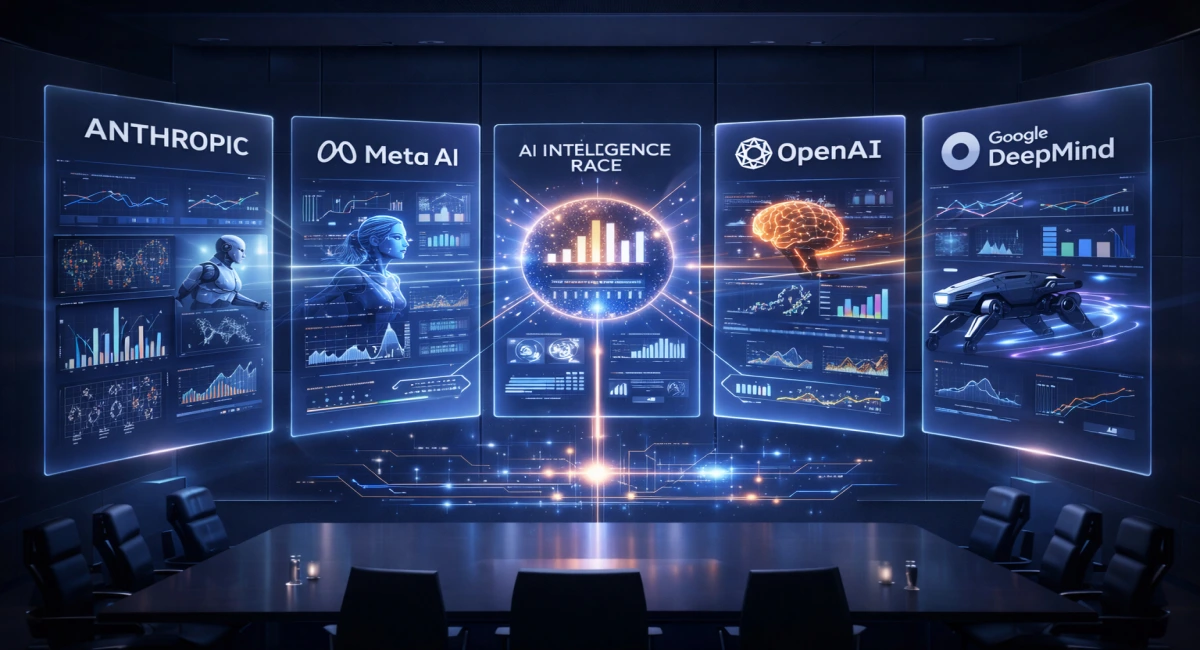
The Next 5–10 Years of Innovation
Google DeepMind is not building the next generation of AI tools. It is building the infrastructure of a new kind of intelligence — one that acts in the world, learns from its actions, and grows more capable with each iteration. The scale of ambition is matched only by the scale of the stakes.
For businesses, this means a window of strategic opportunity that is open now but will not stay open indefinitely. The organizations that learn to deploy autonomous agents thoughtfully — not just as cost-reduction tools, but as genuine collaborators in complex work — will accumulate advantages that compound over time.
For individuals, it means developing new fluencies: the ability to direct AI agents toward meaningful goals, to evaluate their outputs critically, and to contribute the judgment and creativity that autonomous systems still cannot replicate.
Autonomous AI is not a future we are drifting toward. It is a future being deliberately built by some of the most talented researchers in the world — right now. The question is not whether to engage with it, but how to do so wisely, boldly, and with a clear sense of what we want the outcome to be.