
How AI is evolving from passive tools into autonomous systems that think, decide, and act — reshaping the internet as we know it.
Then we prompted.
Now, AI acts.”
Something fundamental is shifting beneath our feet. The tools we built to answer questions are learning to take action. The assistants we used to talk to are learning to work on our behalf—silently, continuously, autonomously.
This isn’t just a product upgrade. This is a structural transformation. AI is moving from being a tool you use to being an agent that operates—booking your flights, writing your code, managing your inbox, and navigating systems you’ve never had to touch.
But what exactly are AI agents—and why are they being called the next internet revolution?
From Search → Prompts → Autonomous Actions
Every era of the web has been defined by how humans interact with information and systems. We’re now entering the third and most disruptive era of that journey.
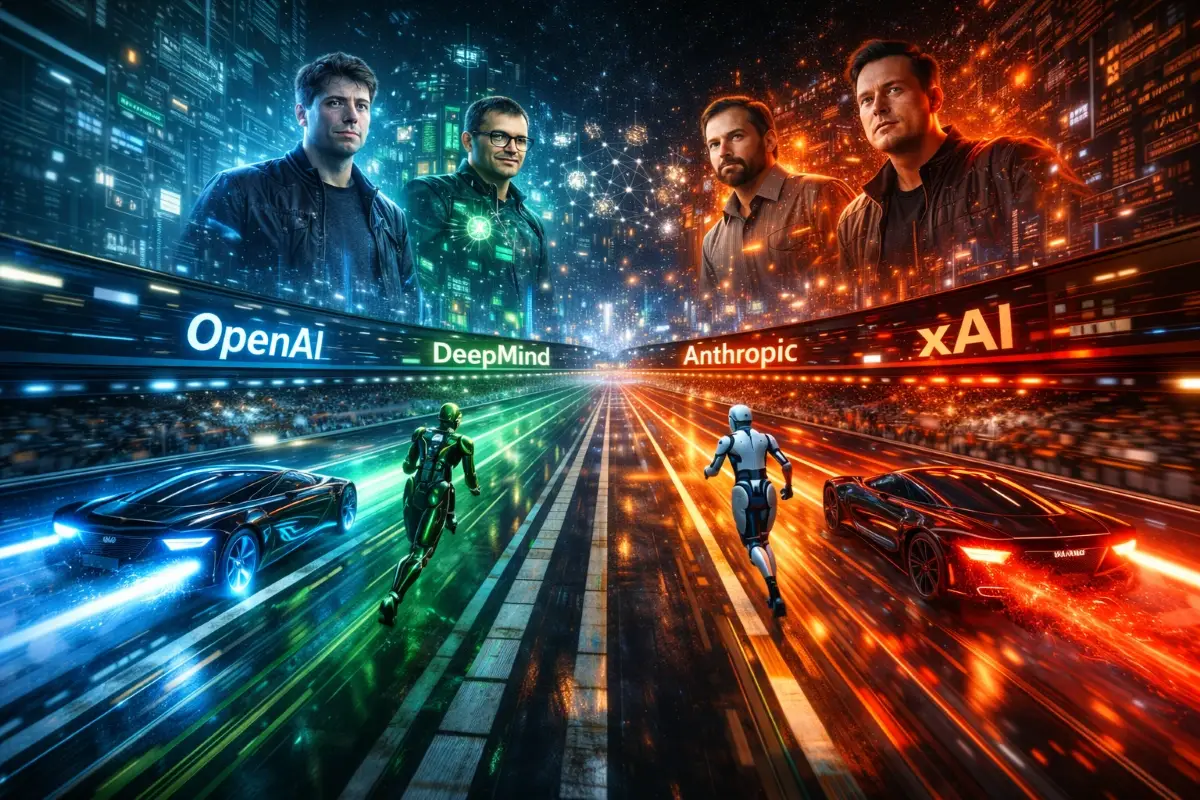
Search engines and static pages. Humans navigate to find. Passive consumption. The web as a library.
Social platforms, apps, user-generated content. Humans create and interact. Dynamic engagement. The web as a city square.
AI agents act on your behalf. Systems reason and decide. Continuous delegation. The web as a workforce.
Prompts = Instructions. You tell it what to do. It responds. The loop ends.
Agents = Decision-makers + Executors. You tell it the goal. It figures out how—and does it.
Understanding AI Agents in Simple Terms
The term “AI agent” gets thrown around loosely—but there’s a precise definition worth understanding. An AI agent is a system that doesn’t just respond to a single question. It perceives its environment, reasons about what to do, acts through available tools, and learns from feedback—in a continuous loop.
Data, context, environment. The agent reads the situation—emails, APIs, documents, sensor feeds, user goals.
Large language models and planning algorithms that process information and formulate multi-step strategies.
APIs, apps, browsers, code interpreters—the instruments through which the agent affects the real world.
Short-term working memory and long-term persistence—letting agents retain context across sessions and refine over time.
Why Prompt-Based AI Is No Longer Enough
Prompts were revolutionary when they arrived—and still are, for many tasks. But as expectations scale, the cracks show. Prompting is fundamentally a one-shot model. You ask, it answers. That’s it.
- One-step interactions — Each prompt is its own isolated event. No continuity, no memory, no initiative.
- No autonomy — The model won’t act unless told. It waits. Passively.
- No persistence — Close the window, and context vanishes. No ongoing operations, no scheduled tasks.
How AI Agents Change the Game
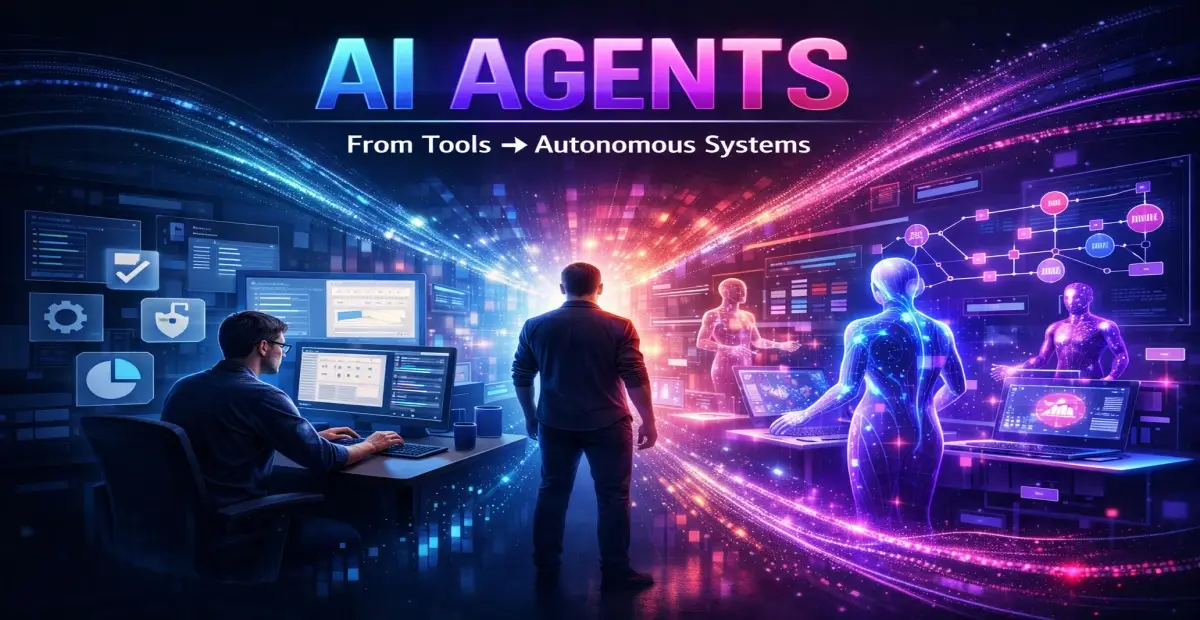
Agents flip this model entirely. They are designed to operate on goals, not just instructions— breaking complex objectives into sub-tasks, executing each, adapting to outcomes, and progressing toward the goal without constant human input.
Where AI Agents Are Already Making Impact
This isn’t speculative. Agents are active—and expanding—across industries that touch millions of people every day.
- Automated market research
- Meeting scheduling & follow-ups
- CRM updates and lead tracking
- Document generation & review
- Customer support automation
- Autonomous coding assistants
- Debugging and test generation
- CI/CD pipeline management
- Code review and refactoring
- Infrastructure provisioning
- End-to-end travel planning
- Personal finance tracking
- Smart assistant evolution
- Health habit monitoring
- Research & summarization
The Shift From “Browsing” to “Delegating”
The web was built for humans. Pages, buttons, links—all designed for eyes and fingers. Agents are rewriting that assumption at a structural level.
| Element | Old Internet | Agent-Powered Internet |
|---|---|---|
| Websites | Visual destinations for humans | API endpoints for agents to query |
| Apps | Tools humans operate directly | Instruments agents orchestrate |
| Users | Active navigators of information | Managers who supervise AI systems |
| Intent | Search for information | Delegate outcomes to be achieved |
Old Internet: Humans navigate the web to accomplish things.
New Internet: Agents navigate the web while humans supervise the results.
What Powers AI Agents?
Understanding what’s under the hood demystifies the magic—and reveals why the timing of this shift is not accidental. Several technologies matured simultaneously to make this possible.
The confluence of reasoning-capable LLMs, mature tool-use protocols, and scalable memory architectures has crossed a threshold. Agents can now reliably execute multi-step tasks with meaningful real-world impact—something that was science fiction just two years ago.
The Hidden Challenges of AI Agents
The power of autonomous action comes with proportional risk. Honest analysis of agents requires engaging with the harder questions—not just the promises.
Agents compound errors across multi-step workflows. A single wrong assumption early can cascade into costly mistakes downstream.
An agent with access to APIs and financial tools is a high-value attack surface. Prompt injection and privilege escalation are real threats.
When an agent makes a consequential decision, who is responsible? Ownership of AI actions remains legally and morally unresolved.
Delegating too much too fast erodes human judgment and institutional knowledge. Speed without oversight is a liability, not an advantage.
“With autonomy comes responsibility—and risk. The organizations that deploy agents wisely will earn enormous leverage. Those that deploy carelessly will pay for it.”
The Rise of Autonomous Digital Ecosystems
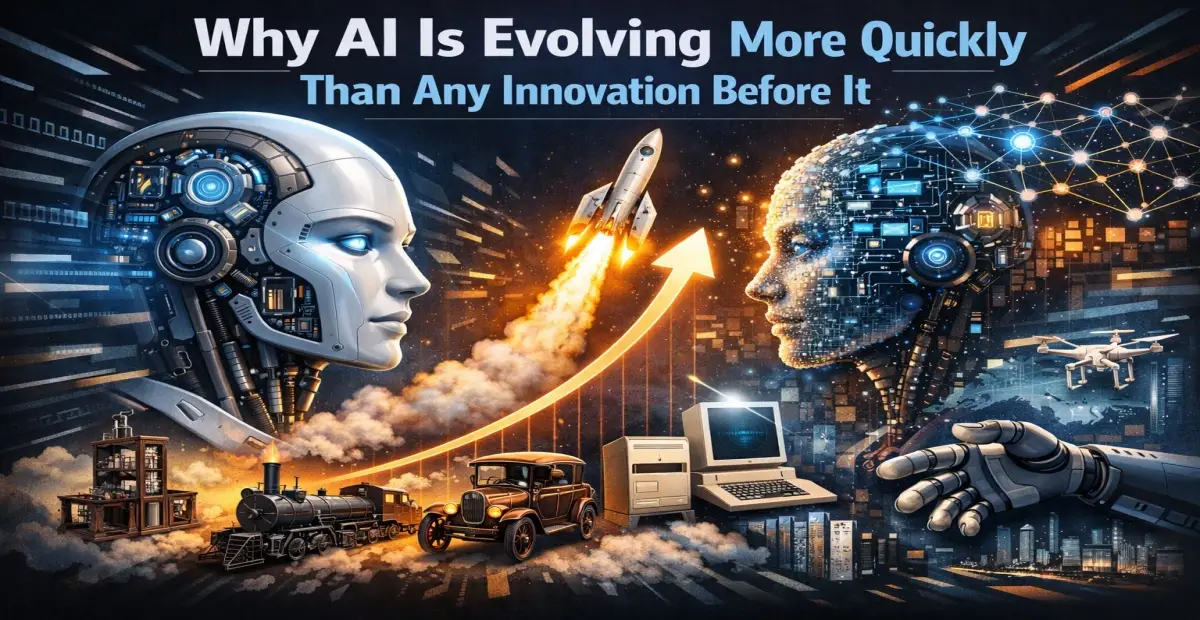
The trajectory is clear. The question isn’t whether agents will become central to how the internet operates—it’s how quickly the infrastructure, norms, and expectations will catch up.
- Personal AI Employees — Dedicated agents that manage your communications, research, schedule, and finances continuously and proactively.
- Fully Automated Workflows — Business processes that run end-to-end without human touchpoints—from lead generation to invoice collection.
- Agent-to-Agent Communication — AI systems negotiating and transacting with one another on behalf of their respective human principals.
- “Agent-First” Products — Apps and platforms designed primarily to be operated by agents, not by humans clicking through interfaces.
What This Means for You
The implications aren’t abstract—they’re immediate and personal. Your positioning in this shift depends on which category you’re in.
The most valuable skill is no longer execution—it’s orchestration. Define goals clearly, supervise autonomously, and audit outputs critically.
Design for machine consumption, not just human interaction. APIs, structured outputs, and agent-legible interfaces will define the next generation of products.
Agents as a Service will replace many software subscriptions. Embed agent capabilities into your offerings or risk being replaced by those who do.
“We’re moving from typing instructions to delegating outcomes.”
AI agents are not a feature. They’re not a product category. They are a fundamental reimagining of how the internet is used, who uses it, and what “using it” even means.
The web was built for fingers and eyes. Agents are rebuilding it for goals and outcomes. Every layer of the stack—from how apps are designed to how contracts are enforced—will be touched by this transition.
The question isn’t whether AI agents will reshape the internet.
It’s how fast you adapt to them.