
Key Takeaways
- England successfully limited Messi’s influence during the first hour.
- Anthony Gordon gave England a deserved second-half lead.
- Argentina increased pressure after tactical substitutions.
- Messi’s move toward the right flank changed the game’s dynamics.
- Enzo Fernández equalized before Lautaro Martínez scored the stoppage-time winner.
- Argentina will face Spain in the FIFA World Cup 2026 final.
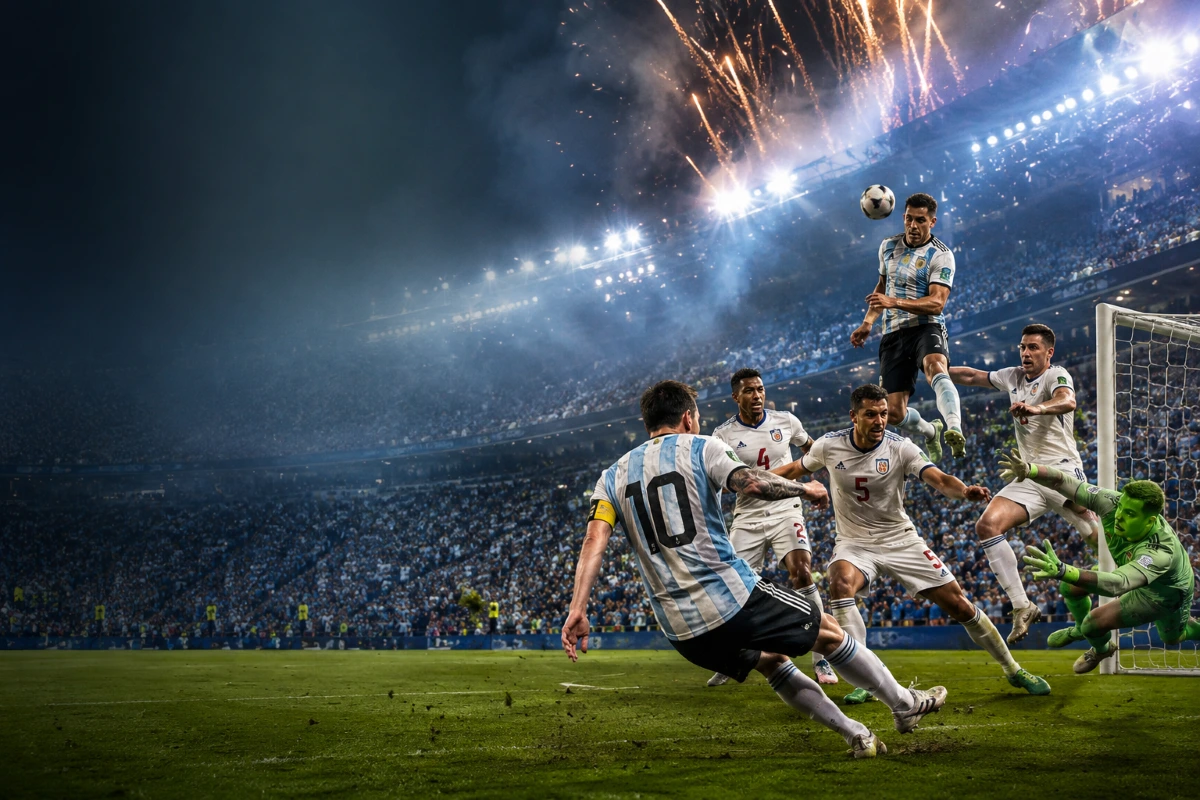
Lionel Messi once again proved why he remains one of football’s greatest players, helping Argentina overturn a one-goal deficit to defeat England 2-1 and secure a place in the FIFA World Cup 2026 final.
For much of the contest, England appeared to have executed their defensive plan almost perfectly. Messi was denied space between the lines, Argentina struggled to create clear opportunities, and Thomas Tuchel’s side looked in control after taking the lead midway through the second half.
But elite players rarely need many chances.
As England gradually retreated deeper into their own half, Messi began finding more freedom on the right side of the pitch. His intelligence, patience, and vision eventually changed the game, providing assists for both Argentina goals as Enzo Fernández equalized before Lautaro Martínez headed home the dramatic winner in stoppage time.
England’s Defensive Blueprint Worked for More Than an Hour
England entered the semifinal knowing Messi would be Argentina’s primary creative outlet.
Instead of allowing him to receive the ball centrally, England compressed the midfield and assigned multiple players to limit his influence whenever he drifted inside.
The strategy initially paid off.
Messi recorded relatively few dangerous touches during the opening stages, while England’s midfield remained disciplined and prevented Argentina from progressing through central areas. Much of Argentina’s possession stayed harmless, forcing them into slower build-up play instead of direct attacks.
The defensive organization reflected careful preparation, demonstrating England’s intention to frustrate Argentina rather than engage in an open attacking contest.
Anthony Gordon Gave England the Advantage
The breakthrough arrived in the second half.
England produced one of their best attacking moves of the evening as Morgan Rogers delivered an inviting cross that Anthony Gordon converted from close range.
The goal rewarded England’s disciplined performance and placed them within touching distance of their first World Cup final in decades.
At that stage, momentum appeared to favor England.
Argentina looked frustrated, while England’s defensive structure continued limiting clear chances.
Argentina Never Lost Their Belief
Despite falling behind, Argentina refused to panic.
Coach Lionel Scaloni introduced attacking changes that stretched England’s defensive shape and increased pressure around the penalty area.
Rather than forcing low-percentage shots, Argentina circulated possession patiently, waiting for defensive gaps to appear.
As England dropped deeper to protect their lead, Argentina began controlling possession for extended periods, allowing Messi to influence the match more frequently.
That shift ultimately became the turning point.
Messi Changed His Position—and the Match Changed With Him
One of the most important tactical developments occurred during the final stages.
Instead of remaining in central attacking areas, Messi increasingly drifted toward the right flank.
Operating from wider positions gave him more time on the ball while creating better crossing angles into England’s crowded penalty area.
The adjustment forced England’s defenders to make difficult decisions.
Should they step out and challenge Messi, potentially opening space behind them, or stay compact and allow him time to deliver dangerous passes?
Either option carried significant risk.
Messi’s movement gradually destabilized England’s defensive organization and created opportunities that had been absent earlier in the match.
Two Moments of Brilliance Decided Everything
Football often turns on moments rather than prolonged dominance.
Argentina found their equalizer late in the match when Enzo Fernández struck after sustained attacking pressure, with Messi playing an important role in the move.
Rather than settling for extra time, Argentina continued pushing forward.
Deep into stoppage time, Messi received possession near the right side of England’s penalty area.
Instead of forcing a shot, he delivered a perfectly weighted cross toward Lautaro Martínez, who rose above the defense to head home the winning goal.
It was Messi’s second assist of the evening—and arguably the defining contribution of the semifinal
England’s Tactical Shift Proved Costly
England’s defeat was not solely about Messi’s brilliance.
It also reflected a noticeable tactical change after taking the lead.
Rather than maintaining attacking pressure, England gradually focused on defending deeper inside their own half.
The reduced possession allowed Argentina to dominate territory and repeatedly attack the penalty area.
With fewer opportunities to relieve pressure through possession, England spent much of the closing stages reacting instead of controlling the match.
The strategy nearly succeeded, but against a player like Messi, sustained pressure eventually becomes difficult to withstand.
Messi Continues to Deliver on Football’s Biggest Stage
At 39 years old, Messi continues producing decisive performances when Argentina need him most.
While he no longer relies on explosive pace, his understanding of space, timing, and decision-making remains unmatched.
Against England, he did not dominate every minute.
Instead, he conserved energy, waited patiently, and influenced the contest precisely when it mattered most.
Those qualities have become trademarks of the latter stages of his remarkable career.
His ability to determine major matches with only a handful of touches continues separating him from almost every other player in world football.
Argentina Set Up World Cup Final Against Spain
The victory sends defending champions Argentina into another FIFA World Cup final, where they will face Spain in one of the tournament’s most anticipated matches.
Spain arrive after an impressive semifinal victory over France, setting up a clash between Europe’s champions and South America’s reigning champions.
For Argentina, the semifinal demonstrated the resilience that has defined their recent success.
For England, the defeat raises fresh questions about game management, tactical adjustments, and their inability to close out major knockout matches despite taking the lead.
Final Thoughts
England showed that Lionel Messi can be contained—but only for so long.
Their disciplined defensive structure frustrated Argentina for much of the semifinal and limited Messi’s influence during the opening hour.
However, football’s greatest players rarely require constant involvement to decide important matches.
Messi recognized the tactical changes unfolding around him, adapted by drifting wider, and delivered two decisive assists that transformed the outcome.
Argentina advanced because they remained patient, trusted their system, and capitalized when the opportunity finally arrived.
For England, the semifinal will be remembered as a painful lesson in tournament football: controlling a match for long periods means little if the decisive moments belong to the opposition.