
Special Report
How AI Is Changing the Future of Work
It’s not about job loss. It’s about something far more profound—and far more urgent.
By 2030, up to 30% of jobs could be automated. That number has sent shockwaves through boardrooms, living rooms, and policy chambers alike. But here’s what the headlines keep getting wrong: that’s only half the story.
The real shift isn’t job loss. It’s job transformation—a fundamental reimagining of how work gets done, who does it, and what human beings are actually for in an increasingly intelligent world.
“The question is no longer whether AI will change your job. The question is whether you’ll change with it.”
Fear is understandable. When a machine can write code, draft legal briefs, diagnose diseases, and compose symphonies, the instinct is to panic. But the workers who are thriving—and the organizations quietly pulling ahead—aren’t the ones fighting AI. They’re the ones learning to dance with it.
So, is AI replacing you—or upgrading your career?
The answer depends entirely on what you do next.
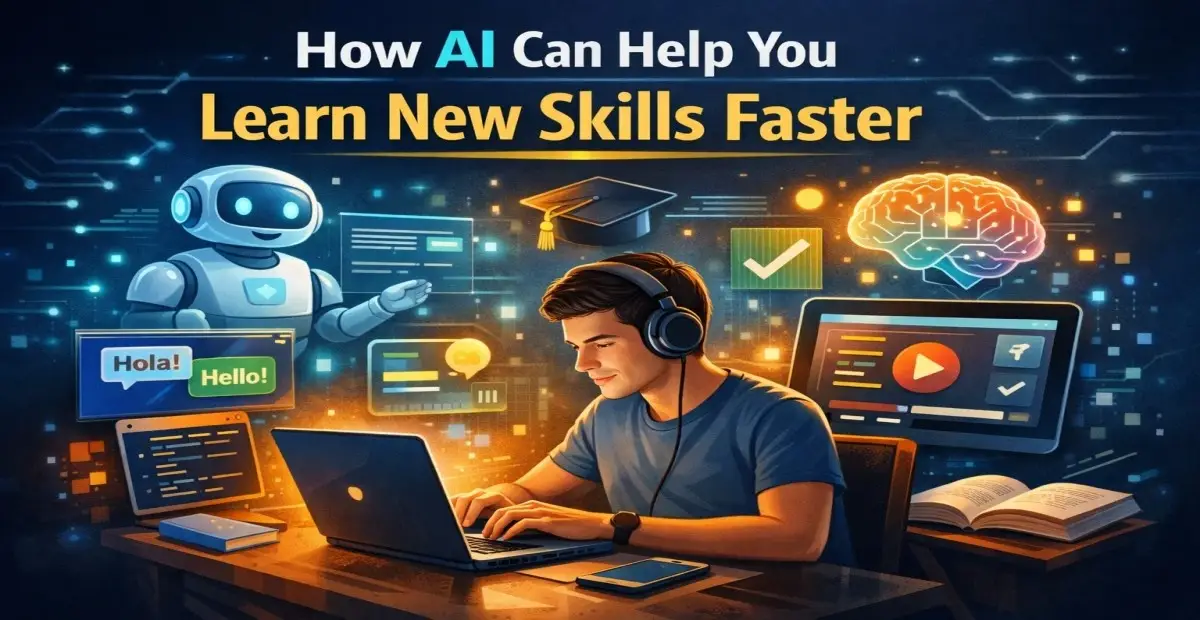
Why This Moment Is Different
Artificial intelligence isn’t a future threat anymore. It’s already embedded in the workflows of everyday business—generating marketing copy, flagging fraud, scheduling surgeries, and answering customer calls. You’ve used it today, whether you realized it or not.
And unlike past waves of automation that displaced specific industries, this one is touching every sector simultaneously. Finance. Healthcare. Law. Education. Manufacturing. Creative industries. No corner of the economy is untouched.
Skills are becoming obsolete faster than any university curriculum can keep pace with. The half-life of a professional skill has shrunk to under five years in many fields. What made you an expert in 2020 may make you look behind the curve by 2026.
The urgency is real. But so is the opportunity—if you know where to look.
And that starts with understanding what’s actually changing.AI Isn’t Ending Work. It’s Rewriting the Rules.
Let’s be precise about the argument: AI is not eliminating work. It is redefining how work is done, who does it, and what skills matter.
History offers a useful lens. The industrial revolution didn’t eliminate labor—it redirected it. The rise of computers didn’t make accountants obsolete—it freed them from arithmetic and elevated their judgment. Every great wave of technological change has always expanded the total scope of human work, even as it rendered specific tasks unnecessary.
This moment will be no different. The scale, however, will be unprecedented. And the speed will leave the unprepared behind.
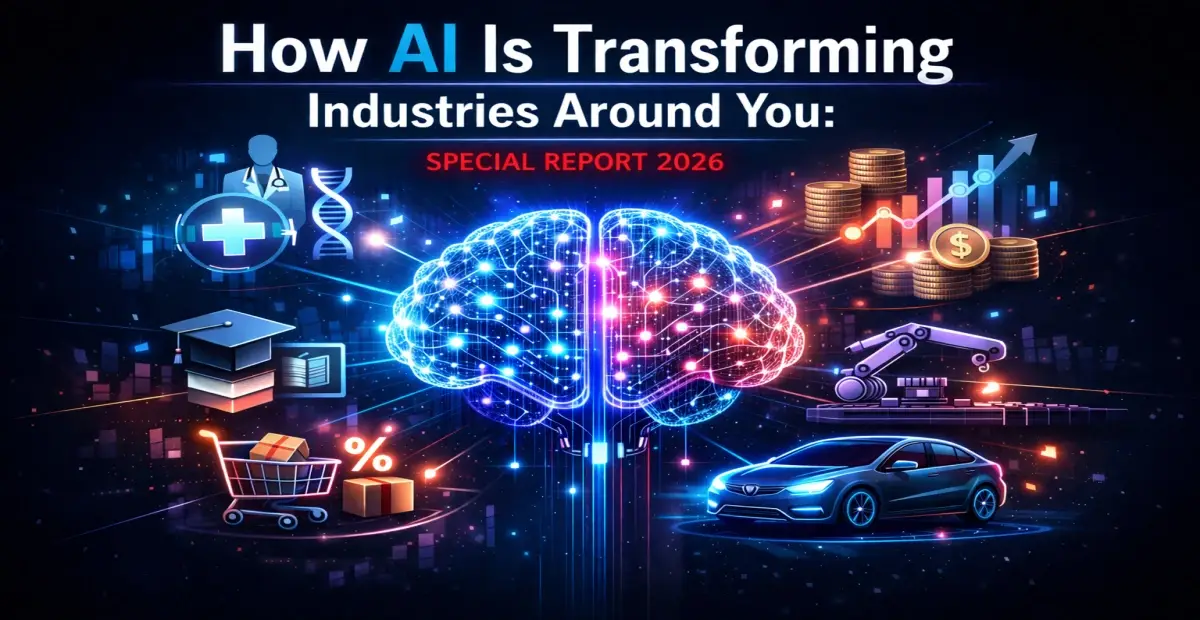
The Automation of the Repetitive
Start with what’s already happening. Across industries, AI is absorbing the work that was always a poor use of human intelligence to begin with: data entry, invoice processing, customer query routing, compliance checking, appointment scheduling.
These tasks weren’t fulfilling. They were expensive and error-prone. Automating them isn’t a tragedy—it’s a long-overdue correction.
JPMorgan Chase deployed an AI contract intelligence platform that reviews commercial loan agreements in seconds—work that previously consumed 360,000 hours of lawyer time annually. Those lawyers didn’t disappear. They moved upstream, to the complex negotiations machines can’t navigate.
The pattern is consistent: AI absorbs the repetitive, humans ascend to the consequential. Productivity increases. Quality improves. And the humans involved—when organizations invest in the transition—find their work more meaningful, not less.
But that’s not the most significant transformation underway.
The more striking development is what AI is creating, not destroying.An Entire New Category of Work
Ten years ago, the job title “Prompt Engineer” didn’t exist. Neither did “AI Ethics Officer,” “Machine Learning Model Auditor,” or “Human-AI Interaction Designer.” Today, these are among the fastest-growing and highest-compensating roles in the global economy.
The AI boom isn’t just automating old jobs. It’s manufacturing entirely new ones—roles that require a combination of deep domain expertise and the ability to think about, communicate with, and govern intelligent systems.
- Prompt Engineer
- AI Trainer
- AI Ethicist
- LLM Fine-tuning Specialist
- AI Product Manager
- Synthetic Data Curator
- Responsible AI Lead
- Digital Transformation Strategist
These aren’t niche boutique roles. The World Economic Forum projects that AI-adjacent positions will grow at roughly three times the rate of the broader labor market through the end of the decade. The organizations building these capabilities now will hold asymmetric advantages when the next wave hits.
The window to develop these skills isn’t ten years from now. It’s now.
The Great Skill Rebalancing
For decades, professional success was largely a function of what you knew. Doctors valued for their encyclopedic recall. Lawyers valued for procedural mastery. Engineers valued for domain expertise. Knowledge was the moat.
AI has flooded that moat. When a language model can surface medical literature, draft legal arguments, and generate working code in seconds, the value of stored knowledge diminishes dramatically. What rises in its place is something machines have not yet touched.
| Skills Under Pressure | Skills in Demand |
|---|---|
| Rote data analysis | Critical judgment & synthesis |
| Template-based writing | Original creative thinking |
| Standard report generation | Storytelling & communication |
| Rules-based decision making | Emotional intelligence & empathy |
| Isolated domain expertise | Cross-domain integration |
| Following fixed processes | Adaptability & learning agility |
Knowing how to work effectively with AI will soon be more valuable than trying to compete against it. The professional edge belongs to the person who can ask better questions, think more clearly about the outputs, and apply human judgment where machines fall short.
This is not a soft skill revolution. It’s a cognitive revolution—and it rewards the curious, the adaptable, and the deeply human.
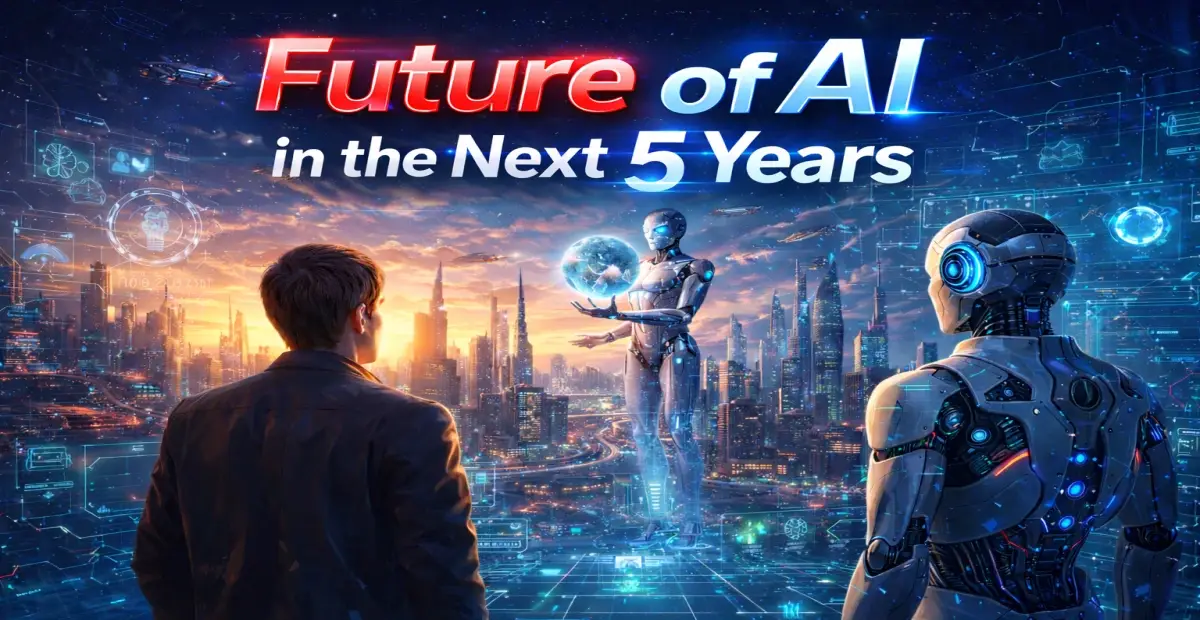
Human + AI: The New Partnership
The dominant narrative—AI versus humans—is not just wrong. It’s dangerously misleading. The organizations producing the most remarkable results right now aren’t the ones that have replaced humans with AI or ignored AI to protect humans. They’re the ones that have fused the two.
Think of it as augmentation rather than automation. AI as a co-pilot, not a replacement pilot.
Surgeons at major medical centers are using AI systems that analyze imaging data in real time during procedures—flagging anomalies the human eye might miss under pressure. The surgeon still operates. The AI just makes them better. Outcomes improve. Human expertise remains indispensable.
The same dynamic plays out in creative fields. The best designers aren’t resisting AI image tools—they’re using them to prototype at ten times the speed and iterate with a creative freedom that wasn’t economically viable before. Architects. Writers. Musicians. The most innovative practitioners in every creative discipline are treating AI as a collaborator, not a competitor.
The human skill that matters most in this partnership? Knowing when to trust the machine and when to override it.
Which brings us to a shift that cuts deeper than any individual skill—the transformation of work culture itself.How AI Is Reshaping Work Culture
The transformation isn’t only in what work gets done—it’s in how, where, and when. AI is acting as an accelerant to shifts that were already underway, and introducing several new ones.
Remote and hybrid work, once seen as a pandemic-era anomaly, has been made permanent by AI-powered collaboration tools that allow distributed teams to coordinate, communicate, and produce with an effectiveness that was unimaginable a decade ago.
The gig economy is expanding rapidly, as AI tools lower the barrier for skilled independent workers to match themselves to complex projects that once required being employed by large institutions. A freelance data scientist in Nairobi can now deploy tools that previously required a full enterprise data team.
And management itself is being transformed. Leaders now operate with real-time analytics on team performance, project velocity, and resource allocation. The best managers are learning to use this data as a prompt for conversation, not a substitute for leadership.
The Risks We Cannot Ignore
Intellectual honesty demands we look squarely at the concerns—not to catastrophize, but because clear-eyed awareness of the risks is the precondition for navigating them well.
Displacement Anxiety
For workers in mid-skill roles—administrative, clerical, entry-level knowledge work—the near-term disruption is real and not easily romanticized. Transition takes time, support, and investment that many individuals and governments aren’t yet providing.
Bias and Ethics
AI systems trained on historical data can encode and amplify historical biases—in hiring tools, lending algorithms, and medical diagnostics. Without deliberate governance, automation can scale inequity at machine speed.
The Widening Gap
Access to AI tools and AI education is not evenly distributed. Workers and economies with the resources to adapt will pull further ahead. Those without risk being left behind in a way that compounds existing structural inequalities.
These aren’t reasons to slow down. They’re reasons to be deliberate—to ensure that the workforce transition is managed with the same urgency we bring to the technological development that’s driving it.
What You Should Do—Starting Now
Here’s the practical reality: the workers who will thrive in the next decade are already differentiating themselves from those who will struggle. The gap is opening now, not in 2030.
-
Upskill continuously and deliberately. Identify the AI tools most relevant to your specific field and invest real time learning them—not superficially, but with depth. Treat this as the professional development of the decade.
-
Develop your AI fluency. You don’t need to be an engineer. But understanding how these systems work—their capabilities, their limitations, their failure modes—makes you a far more effective user and a far more credible voice in how they’re deployed.
-
Double down on irreducibly human skills. Empathy. Complex communication. Ethical reasoning. Strategic creativity. These aren’t soft skills—they’re survival skills in an AI-abundant economy. Invest in them accordingly.
-
Build adaptability as a habit, not an emergency response. The workers who navigate disruption best are those who have made learning a daily practice, not a panic response to a pink slip. Start now, while the urgency feels abstract.
-
Find your edge at the human-AI interface. What can you do that becomes dramatically better when combined with AI? That intersection—your domain expertise amplified by machine capability—is where the most defensible and valuable career positions exist.
What Organizations Must Do
For business leaders, the challenge is both more complex and more consequential. The decisions made in the next three to five years will determine whether organizations emerge from this transition as category leaders or cautionary tales.
Invest in reskilling now, not later. The most forward-thinking companies—Amazon, AT&T, Walmart—have committed billions to workforce reskilling programs. This isn’t charity. It’s strategic capital allocation. The cost of not investing is far higher than the cost of doing so.
Deploy AI responsibly, with governance built in from the start. Organizations that treat ethics and governance as an afterthought will face regulatory risk, reputational damage, and—most importantly—the real human costs of poorly governed automation. Build the oversight structures before they’re legally mandated.
Cultivate a culture of human-AI collaboration. This is leadership work. If people at every level of your organization are afraid of AI, they will resist adoption in ways that quietly undermine your strategic plans. Transparency, education, and early wins are the antidote.
Don’t mistake efficiency for transformation. The organizations truly benefiting from AI aren’t just using it to cut costs—they’re using it to reimagine their value proposition, build capabilities they didn’t previously have, and serve customers in ways that weren’t previously possible.
“The future workplace won’t be human versus machine. It will be human and machine—together—solving problems neither could crack alone.”
The most powerful intelligence is not artificial and it is not human. It is the combination of both, working in genuine partnership.
The Shape of Work to Come
Project forward a decade. The most productive organizations will run with AI-integrated teams that operate at a pace and creativity level that is difficult to imagine from where we stand today. Work will be more specialized in some ways, more generalist in others—and far more dynamic in all of them.
The roles that thrive will combine deep human expertise with sophisticated AI fluency. The work itself will be less repetitive, less clerical, more creative, and more consequential. The humans in the loop will be there because their judgment, empathy, ethics, and creativity genuinely matter—not as holdovers from a pre-automation world.
Career paths will look less like ladders and more like networks—lateral moves, continuous learning, portfolio careers, hybrid roles that don’t yet have names. The most successful professionals will be the ones most comfortable with permanent reinvention.
This is not a utopian prediction. It is a realistic description of the trajectory—one that comes with genuine disruption, genuine inequity, and genuine uncertainty alongside its genuine promise.
AI is not the end of work. It is the beginning of a smarter, more demanding, more creative, and more human version of work—one that requires more of us even as it does more for us.
The workers and organizations who understand this—who approach the transformation with curiosity rather than fear, with agency rather than passivity—will not just survive the AI age. They will define it.
The rest will look back and wonder why they waited.
“Adaptation isn’t a choice anymore. It’s the competitive advantage itself.”
Are you ready to adapt—
or be left behind?
The door between those two futures is still open. But it won’t be forever. The time to act is not when the disruption reaches your desk. It’s now—before it does.
Share this piece with a colleague who needs to hear it. Start the conversation in your organization. And ask yourself, honestly: what is the one thing you’re going to do differently this month?
That question, acted upon, is where futures get built.