
The automation gold rush is on. But picking the wrong platform could cost you months — and a small fortune. Here’s the map you actually need.

The Rise of AI Agent Platforms
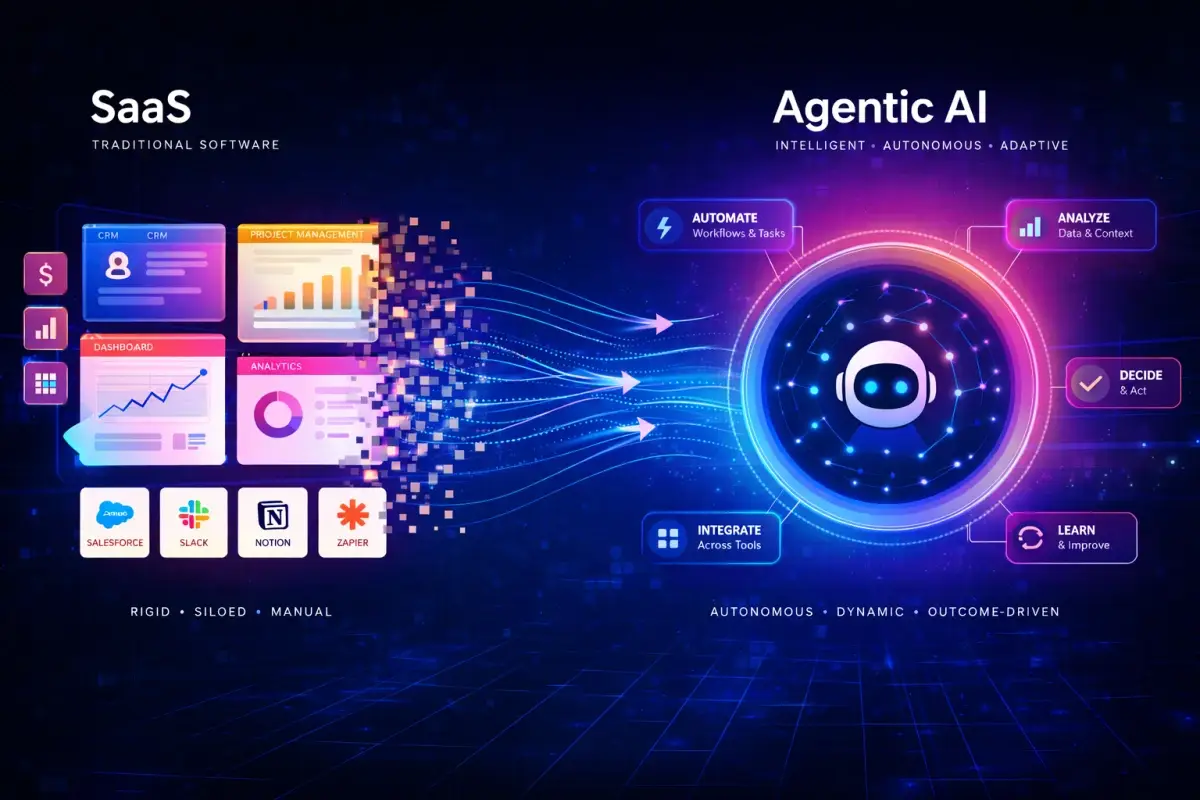
Picture this: it’s 2022, and “automation” meant scheduling emails or routing Typeform submissions to a spreadsheet. Useful? Sure. Transformative? Hardly. Fast-forward to 2026, and the landscape has been turned upside down. AI agents — software that doesn’t just follow rules but reasons, decides, and acts autonomously — are now doing the work of entire departments. Customer support tickets are resolved before humans even see them. Marketing campaigns write, test, and optimize themselves overnight. Code reviews happen in seconds.
We’ve crossed a threshold. The shift from “tools” to “agents” isn’t semantic — it’s a fundamental change in what software can do on your behalf. An agent doesn’t wait for instructions at every step. It has a goal, a set of capabilities, and the judgment to figure out how to get from A to B without holding your hand through every decision.
But here’s the problem: the market exploded faster than anyone could map it. There are now dozens of platforms claiming to be “the” AI agent solution, each with its own strengths, weaknesses, pricing traps, and learning curves. Choosing wrong doesn’t just waste money — it wastes the one thing you can’t buy back: time.
“The question is no longer whether AI can automate your workflows. It’s which platform will do it without locking you in, breaking your budget, or requiring a PhD to operate.”
Top AI Agent Platforms in 2026
| Platform | Best For | Autonomy Level | Pricing Model |
|---|---|---|---|
| OpenAI Agents | General / Broad Use | High | Token-based |
| Google Gemini Agents | Google Workspace | High | Usage + seats |
| Microsoft Copilot Studio | Enterprise / M365 | Medium | Per-message |
| AutoGen (Microsoft) | Multi-Agent Dev | Very High | Free (OSS) |
| LangChain + LangGraph | Custom Dev Workflows | Very High | Free (OSS) + Cloud |
| Zapier AI Agents | Non-Technical Users | Medium | Task-based tiers |
| Make + AI Extensions | Visual Workflow Builders | Medium | Operations-based |
OpenAI — Custom GPTs & Agents SDK
OpenAI’s Agents SDK, paired with the Responses API and built-in tools like web search, code interpreter, and file retrieval, gives developers a powerful foundation for building production-grade agents. Custom GPTs lowered the floor for non-technical users, while the SDK raised the ceiling for engineers. The caveat: you’re locked into OpenAI’s model ecosystem, pricing can be opaque at scale, and the rapid pace of API changes demands constant upkeep.
Google DeepMind — Gemini + Agents
Gemini’s agentic capabilities shine brightest inside the Google Workspace bubble. Deep integration with Gmail, Drive, Calendar, and BigQuery makes it the default choice for enterprises already running on Google infrastructure. The Gemini 2.0 agent framework introduces native multimodal reasoning — processing text, images, and code in a unified agent loop. The weakness: venture outside the Google ecosystem and the seams start to show.
Microsoft Copilot Studio
Copilot Studio is Microsoft’s bet on democratizing agent creation for the enterprise. It connects to Power Automate, Azure AI services, Dataverse, and the entire Microsoft 365 ecosystem with minimal configuration. It’s genuinely no-code, and the governance controls are best-in-class for large organizations. The trade-off is autonomy: agents here are more structured and rule-based than the open-ended reasoning you get from pure LLM frameworks. It’s a tool for consistent, compliant automation — not experimental AI.
AutoGen (by Microsoft)
AutoGen is for developers who want maximum control over agent behavior. Its core concept — multiple AI agents conversing, delegating, and collaborating on complex tasks — is powerful and flexible. It supports custom tools, multiple LLM backends, and sophisticated orchestration patterns like critic-agent loops and human-in-the-loop checkpoints. The barrier to entry is steep: you’re writing Python, designing agent graphs, and debugging asynchronous conversations. But what you can build is virtually unlimited.
LangChain + LangGraph
LangGraph — LangChain’s graph-based agent orchestration layer — has become the dominant framework for production AI applications that require stateful, multi-step reasoning. Its directed graph model makes agent decision-making transparent and debuggable, a rare virtue in a space where AI behavior is notoriously hard to inspect. LangSmith, the companion observability platform, makes tracing and evaluating agent runs first-class concerns. It has a meaningful learning curve, but the ecosystem and community are second to none.
Zapier AI Agents / Interfaces
Zapier has intelligently pivoted from simple trigger-action automation to AI-powered agents that can handle conditional logic, multi-step research, and draft responses autonomously. Its 7,000+ app integrations remain the widest in the market, and its visual interface is genuinely accessible. The ceiling, however, is real. Complex reasoning tasks, custom model integration, and high-volume use cases will hit limits quickly. It’s the ideal starting point — just know when you’ve outgrown it.
Make (Integromat) + AI Extensions
The visual workflow builder with powerful AI augmentation
Make’s visual scenario builder has always been a step more sophisticated than Zapier’s for technical non-developers — offering branching logic, data transformation, and error handling in an intuitive canvas. Its AI extensions now allow embedding GPT-powered steps, image analysis, and semantic search into workflows without writing code. For operations teams who need visual clarity without full no-code limitations, Make sits in a compelling middle ground.

Key Features to Compare in AI Agent Platforms
Before you evaluate any platform, you need a consistent framework. These are the six dimensions that actually separate winners from pretenders.
Ease of Use (No-Code vs Developer-Friendly)
A platform that requires a dedicated engineer to maintain isn’t a productivity tool — it’s a new dependency. Look for clear visual builders for non-technical users, but don’t sacrifice depth. The best platforms serve both camps: a drag-and-drop interface for business users and full programmatic access for developers. If a platform is “easy” but caps what you can build, you’ll outgrow it in months.
Integration Capabilities (APIs, Apps, Workflows)
An agent is only as powerful as the ecosystem it can touch. Native integrations with your CRM, data warehouse, communication stack, and cloud services are non-negotiable. Watch out for platforms that lean heavily on Zapier or Make as a middle layer — every hop adds latency, cost, and a potential failure point. Direct API access matters more than connector count.
Autonomy & Decision-Making Power
This is the one most buyers overlook. There’s a spectrum from reactive automation (trigger → action) all the way to fully agentic loops where the system plans, executes, checks its own output, and retries on failure. Multi-step reasoning, tool use, memory across sessions, and self-correction are the markers of a genuinely agentic platform. Without them, you’re paying premium prices for glorified Zapier.
Pricing & Scalability
Most platforms look affordable at 100 tasks per month. The real test is what happens at 100,000. Per-task pricing models can explode unexpectedly; seat-based models punish team growth. Look for transparent pricing that scales sub-linearly with usage, and always read the fine print on token consumption — it’s where the hidden costs live.
Customization & Flexibility
Can you bring your own model? Can you swap in a fine-tuned LLM for a specific use case? Can you define custom tools and actions? Flexibility here separates platforms that grow with you from ones that quietly constrain you. Open-source-friendly platforms with strong extension ecosystems consistently age better than walled gardens.
Security & Data Privacy
For enterprise buyers, this is the conversation that happens before any demo. Where does your data go when an agent processes it? Is it used to train the underlying model? What compliance certifications does the platform hold — SOC 2, GDPR, HIPAA? Can you run it on-premises or in your own cloud? These aren’t nice-to-haves in 2026. They’re table stakes for any regulated industry.
Real-World Automation Examples
Theory is fine. But here’s what AI agents actually look like in the wild, right now.
Marketing Automation
An agent monitors competitor price changes, rewrites ad copy, A/B tests variants, pauses underperformers, and reports results — all overnight, without a human in the loop.
Customer Support
An agent triages incoming tickets, resolves 70% autonomously using a knowledge base, escalates edge cases with full context, and drafts responses for the remainder in the rep’s voice.
Personal Productivity
An agent reads your email every morning, drafts responses to routine threads, blocks focus time based on priorities, and summarizes overnight Slack activity into a three-bullet brief.
Business Workflow
A multi-agent pipeline ingests sales call transcripts, extracts action items, updates the CRM, generates follow-up emails, and flags at-risk deals for manager review — in under two minutes per call.
Conclusion: The Best AI Agent Platform for You in 2026
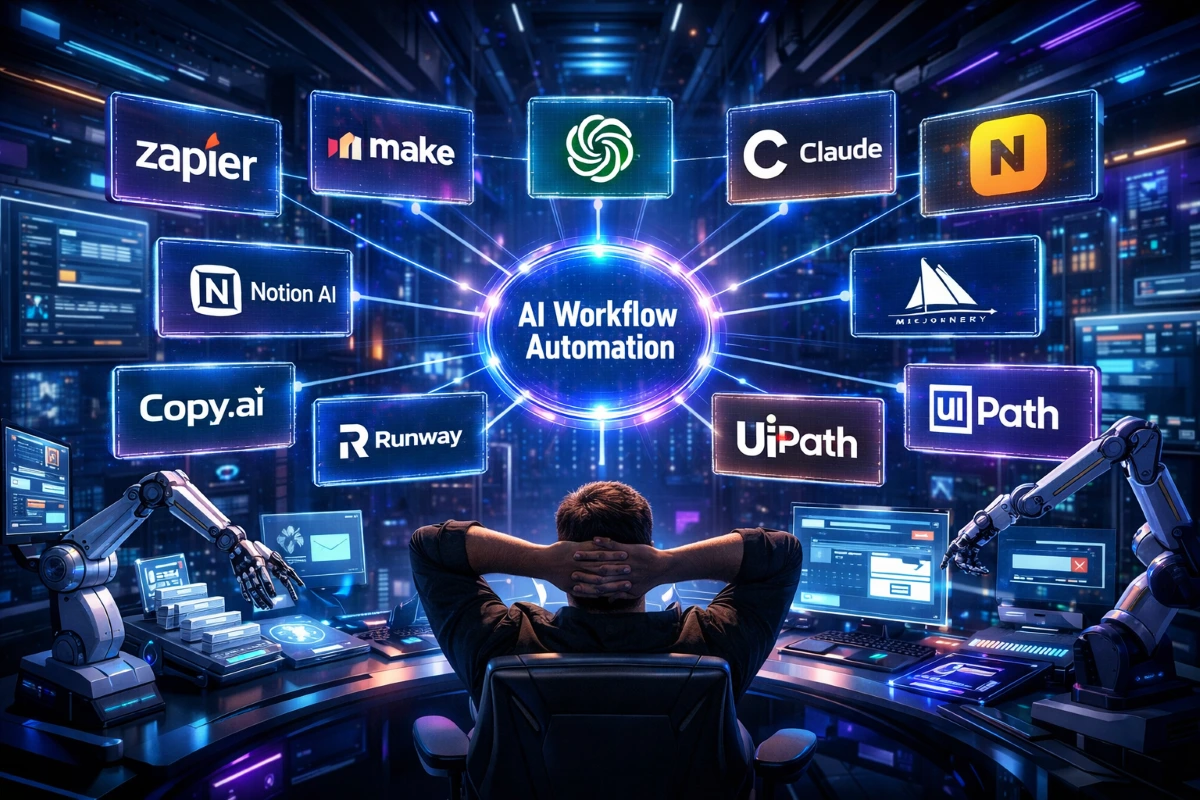
If there’s one thing this comparison reveals, it’s that the question “which platform is best?” has no universal answer. The right platform is the one that fits where you are today and where you’re headed in the next 18 months.
Here’s the short version: If you’re non-technical and want results this week, start with Zapier AI Agents. If you’re running an enterprise on Microsoft infrastructure, Copilot Studio is the obvious fit. If you’re a developer building something serious and scalable, LangGraph is the current gold standard. If multi-agent orchestration is your goal, AutoGen gives you the most headroom. And if you’re all-in on Google’s ecosystem, Gemini Agents will feel seamless in ways nothing else can match.
The agent era isn’t coming. It’s here. The teams and individuals who build fluency with these platforms now will have a structural advantage that compounds over time. The barrier to entry has never been lower. The ceiling has never been higher.
Don’t wait for the perfect platform. Start with the right one for now, build something real, and let your actual experience guide the next decision. The best way to choose your AI agent platform is to use one.