
The race between two of the world’s most powerful AI laboratories is no longer about who builds the smartest model. It’s about who reshapes how billions of people live, work, and create — invisibly, continuously, and at scale.
A New Kind of Arms Race
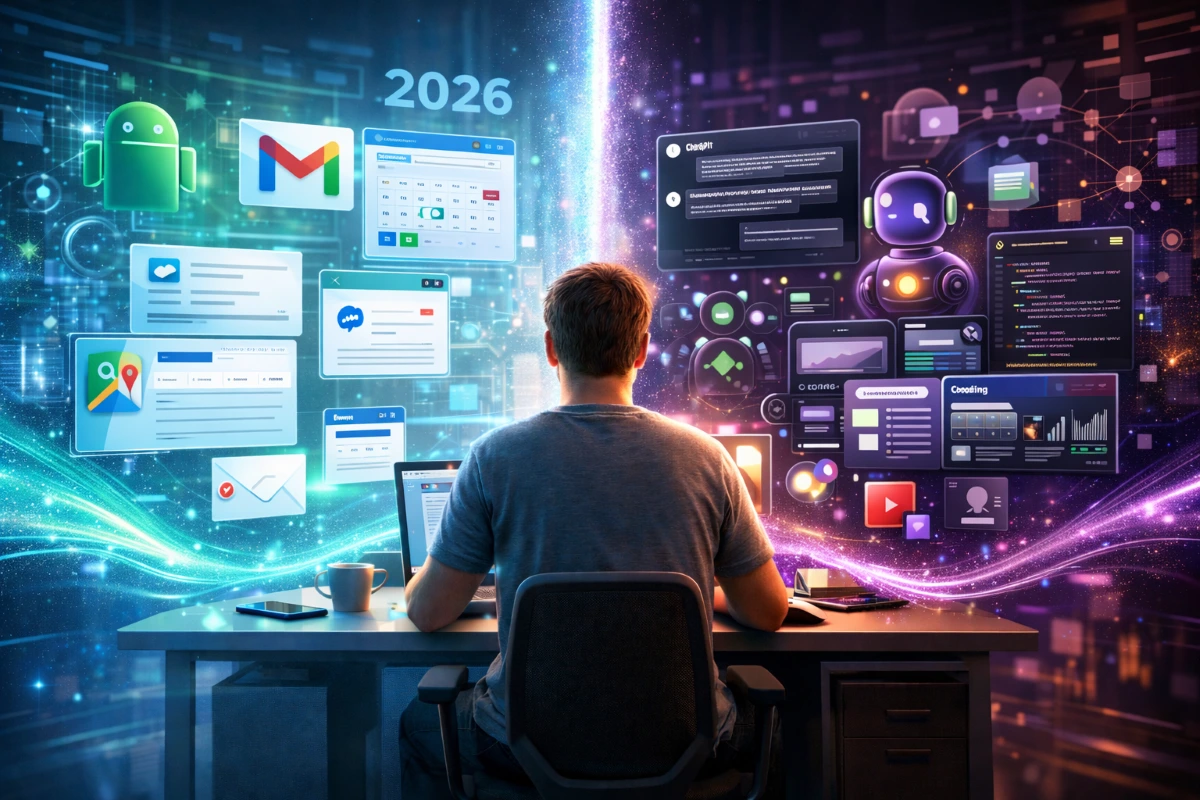
Not long ago, the phrase “AI assistant” conjured images of novelty — a chatbot that could draft an email or settle a trivia dispute. In 2026, that framing feels almost quaint. Artificial intelligence has stopped being a feature and started being the substrate on which digital life runs. It schedules your meetings, synthesizes your research, edits your code, tutors your children, and composes your pitch decks — often before you think to ask.
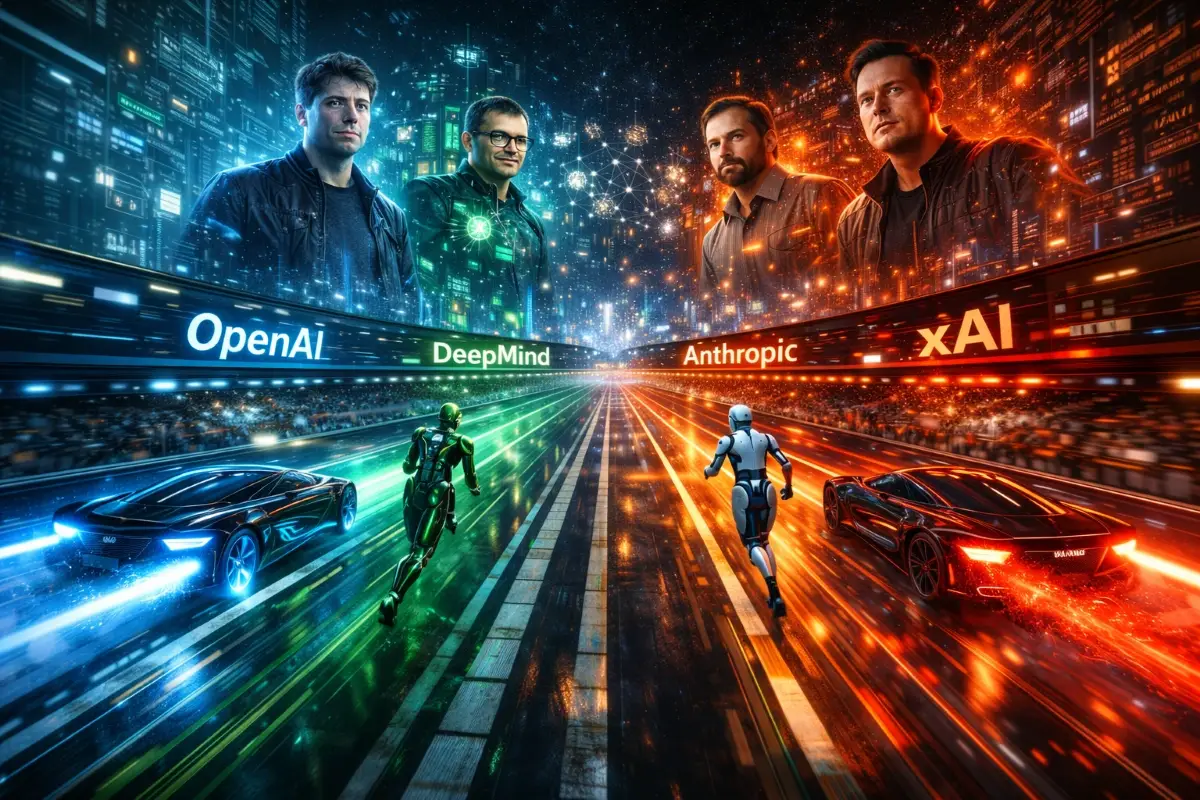
At the center of this transformation stand two institutions whose decisions about product, platform, and philosophy reverberate across every industry: Google DeepMind, the research powerhouse born from Alphabet’s fusion of Google Brain and the legendary DeepMind lab; and OpenAI, the San Francisco organization that ignited the public imagination with ChatGPT and has since become the defining brand name in consumer AI. Their strategies diverge in profound ways. Their combined impact is reshaping civilization’s relationship with intelligence itself.
The Evolution of Everyday AI Tools
From Assistants to Autonomous Agents
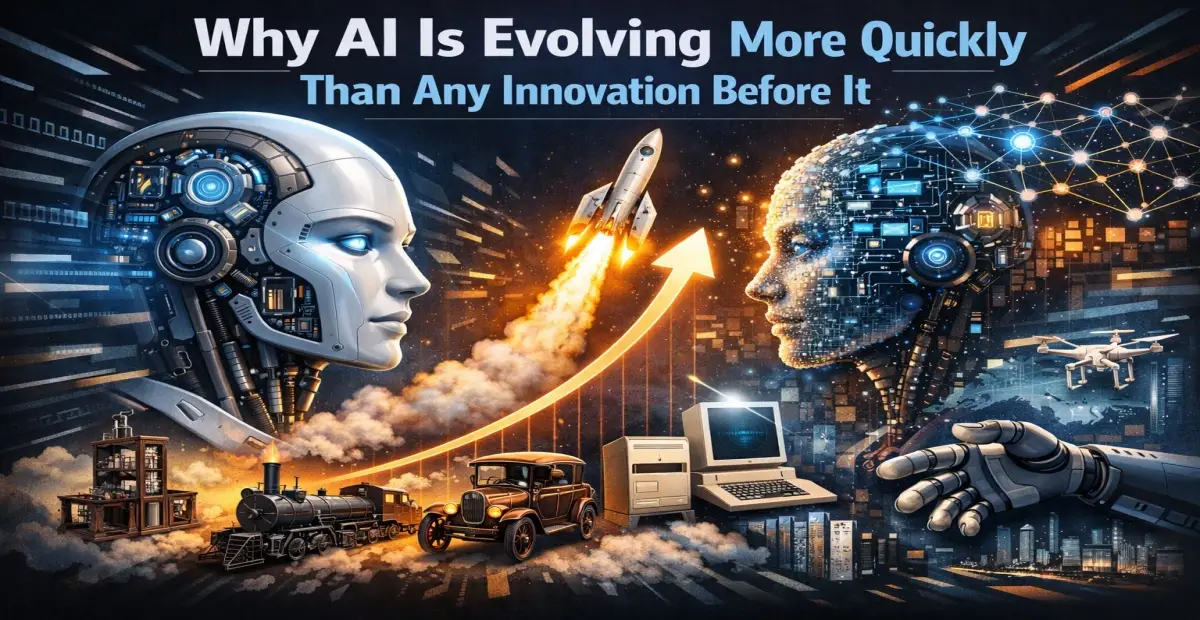
The generation of AI tools that captured the public imagination between 2022 and 2024 was defined by a single interaction pattern: prompt in, response out. You typed a question; the model answered. Sophisticated, certainly — but fundamentally passive. The intelligence lived on the other side of a text box, waiting to be summoned.
What distinguishes 2026’s AI landscape is the emergence of agentic systems: models capable of formulating plans, executing multi-step tasks, calling external services, correcting their own errors, and completing objectives with minimal human hand-holding. The shift from assistant to agent is as significant as the shift from calculator to computer. A calculator awaits input. A computer reasons, decides, and acts.
What Google DeepMind Is Building for Everyday Users
The Gemini Ecosystem and Multimodal AI
Google DeepMind’s flagship offering — the Gemini family of models — represents one of the most ambitious bets in AI history: a natively multimodal architecture capable of reasoning fluidly across text, images, video, audio, and code in a single inference pass. Where earlier systems were bolted together from specialized components, Gemini was designed from the ground up to perceive the world as humans do: all at once, across modalities, without needing to translate between them.
Gemini 2.5, released in early 2026, extended this architecture with dramatically improved long-context reasoning — enabling the model to analyze hour-long videos, entire codebases, or year-long email threads with coherent understanding across the full span. For everyday users, this means an AI that can watch a meeting recording and produce not just a transcript but a reasoned summary of interpersonal dynamics, unresolved decisions, and recommended follow-ups.
AI Inside Workspace and Android
Google’s most powerful strategic asset is distribution. Gemini does not need to acquire users — it inherits them. Gmail’s two billion accounts, Google Docs’ hundreds of millions of active users, Android’s three billion devices: each represents a pre-existing surface into which AI capabilities can be quietly installed. The integration is now deep enough that distinguishing where Google Workspace ends and where Gemini begins has become genuinely difficult.
In practical terms, this means: Gmail can draft, prioritize, and respond to emails autonomously, learning each user’s voice and flagging only those messages that require genuine human judgment. Google Docs can generate first drafts from bullet points, restructure arguments on request, and flag logical inconsistencies in real time. Google Sheets can detect anomalies in financial data, suggest formulas, and generate natural-language explanations of complex models for non-technical stakeholders. On Android, the on-device Gemini Nano model enables these capabilities even in airplane mode, without sending data to the cloud.
Real-World Use Cases: The Google Approach
Smart scheduling has become perhaps the most viscerally useful application of Gemini’s integration with Google Calendar. The system can now analyze not just availability but context: identifying that a particular meeting type historically runs long, that a stakeholder has a hard stop at noon, and that the agenda requires screen-sharing — then proposing a slot and sending the invite without prompting. Users report reclaiming meaningful chunks of administrative time weekly.
Research assistance has similarly matured. NotebookLM, Google’s AI-powered note-taking and synthesis tool, now acts as a personalized research assistant capable of comparing primary sources, identifying contradictions across documents, and generating podcast-style audio summaries on demand — a feature that has found surprising traction among students, journalists, and executives who prefer to absorb information aurally.
How OpenAI Is Transforming Consumer AI Tools
ChatGPT as a Productivity Hub
OpenAI’s bet has been different from Google’s from the beginning: rather than embedding intelligence into existing surfaces, it has attempted to create a new surface that becomes indispensable on its own terms. ChatGPT has evolved from a clever conversational novelty into a full-featured productivity environment — one where users manage files, browse the web, write and execute code, generate and edit images, and conduct complex research, all within a single interface.
The strategic logic is audacious: if OpenAI can make ChatGPT the first thing people open in the morning and the last thing they close at night, it doesn’t need to fight for distribution through operating system deals or browser defaults. It can build its own gravitational field. The evidence suggests this strategy is working. ChatGPT’s weekly active user count surpassed 400 million in early 2026, a figure that rivals major social platforms.
Custom GPTs and AI Agents
One of OpenAI’s most consequential product decisions was the introduction of the GPT Store — a marketplace where users and developers can build, share, and monetize customized AI assistants tuned for specific tasks or domains. A legal researcher can deploy a GPT trained on case law. A marketing director can build one steeped in brand guidelines and historical campaigns. A student can create one that Socratically interrogates rather than simply answers.
This layer of personalization transforms the user relationship with AI from generic to intimate. And with the maturation of OpenAI’s agent framework — allowing GPTs to take multi-step actions across the web, execute code, manage files, and interact with external APIs — the line between “AI assistant” and “AI employee” has grown meaningfully blurry.
Integration with Third-Party Apps
OpenAI’s API has become critical infrastructure for the modern software industry. Thousands of SaaS companies, startups, and enterprise tools have built their AI layers on GPT-4o and its successors, creating an ecosystem so large that OpenAI functions simultaneously as a product company and a platform company — not unlike how Amazon operates both its retail business and the cloud infrastructure on which its competitors run.
This dual position gives OpenAI an unusual vantage point: it can observe, at an aggregate level, how AI is being used across virtually every industry, and use those insights to inform its own product roadmap. It is a feedback loop with no obvious precedent in the history of technology.
The Rise of AI Agents in Daily Life
Multi-Step Task Automation
The defining capability that separates 2026’s AI systems from their predecessors is the ability to pursue goals across time and systems without step-by-step human direction. An AI agent asked to “plan a team offsite for 12 people in Barcelona in June within a €15,000 budget” no longer returns a list of suggestions. It researches venues, compares prices, checks team calendars, drafts an options memo, awaits approval, then books the preferred option — all with a single instruction and one confirmation step.
Cross-App Intelligence
Perhaps more practically useful than any single agent capability is the emergence of AI that coordinates intelligently across multiple tools simultaneously. When an email confirms a client meeting, the AI updates the calendar, pulls the relevant CRM records, retrieves the latest project status, and prepares a briefing document — automatically, before you open your laptop. This cross-app orchestration, impossible without deep integration permissions and sophisticated context management, represents the frontier of practical AI utility in 2026.
Always-On Digital Assistants
The logical endpoint of these trends is ambient intelligence: AI that operates continuously in the background, monitoring relevant data streams, flagging anomalies, preparing context, and nudging toward better decisions — all without being explicitly summoned. Early implementations have emerged through wearables, smart glasses, and persistent mobile agents. The privacy implications are substantial; the productivity implications are substantial in a different direction. The negotiation between these competing considerations will define the next phase of AI’s integration into daily life.
What This Means for Users and Businesses
For Individuals
For individual users, the near-term experience of AI proliferation is primarily one of capability expansion. Tasks that previously required specialized skills — data analysis, legal research, code debugging, video editing, language translation — are becoming accessible to anyone with the patience to learn how to direct an AI system effectively. The term “AI literacy” has entered professional vocabulary the way “computer literacy” did in the 1990s; those who develop it will compound their advantages; those who do not will find themselves at an accelerating disadvantage.
For Businesses
For businesses, the implications are more structurally disruptive. AI-first workflows are not simply faster versions of existing workflows — they are architecturally different, requiring different organizational designs, different skills hierarchies, and different metrics. Companies that treat AI as a tool to accelerate existing processes will capture incremental value. Those that redesign their operations around what AI makes possible will capture transformational value. The gap between these two categories of organizations is already widening, and the pace of widening is accelerating.
For Developers
For the developer community, the AI proliferation of 2026 represents the richest environment for application building in the history of software. The infrastructure laid by Google and OpenAI — APIs, agent frameworks, multimodal capabilities, tool-calling architectures — has dramatically lowered the cost of building AI-powered applications while raising the ceiling of what’s possible. A small team with deep domain expertise and creative vision can build, in weeks, applications that would have required years of engineering and hundreds of millions of dollars in compute just five years ago. The next great companies of the AI era are being founded today.
Future Outlook: What Comes After 2026?
Fully Autonomous Digital Agents
The trajectory of agent development points clearly toward systems capable of managing complex, long-horizon tasks with minimal human oversight — not because AI will become infallible, but because oversight mechanisms will mature alongside the systems themselves. We are approaching an era in which a business owner might delegate not just a task but an entire function — “manage our vendor relationships,” “optimize our marketing spend,” “maintain our compliance documentation” — to AI systems capable of sustained, adaptive execution across weeks and months.
AI-Native Applications
The software generation currently being built is not AI-augmented — it is AI-native. These applications do not add AI as a feature; they are inconceivable without it at their core. Note-taking tools that synthesize and connect ideas as you write. Project management platforms that predict blockers before they materialize. Communication tools that understand organizational dynamics, not just message content. This category of software is not an incremental improvement over what preceded it; it is a different kind of thing entirely.
Convergence of AI and Hardware
The final frontier — and the one most likely to define the decade to come — is the integration of AI with physical hardware. Smart glasses that overlay contextual information on the physical world. Wearables that monitor health continuously and intervene proactively. Ambient computing environments that adapt to individual presence and preference without explicit interaction. Both Google and OpenAI are investing in the physical layer, recognizing that AI confined to screens is AI with an arbitrary constraint. When intelligence extends into the environment itself, the nature of the human-AI relationship will shift more profoundly than any software update can achieve.
“The companies that win the next decade will not be the ones with the smartest models. They will be the ones that make intelligence feel most natural.”
What Google DeepMind and OpenAI are building is not, ultimately, a collection of products. It is a new cognitive infrastructure for civilization — one that will be judged not by its benchmark scores but by whether it helps people live more meaningfully, work more purposefully, and create more freely. That judgment is still being written. 2026 is only the beginning.