
Inside the Agentic AI Race: How Anthropic, DeepMind, Openai, and xai Are Competing  

The question is no longer whether AI can think. The question is whether AI can act — and which company’s AI will act on your behalf first.
$200B+
Estimated market for agentic AI by 2028
34%
New enterprise AI deployments using agent-based architecture in 2026
Increase in agentic API calls year-over-year across major platforms
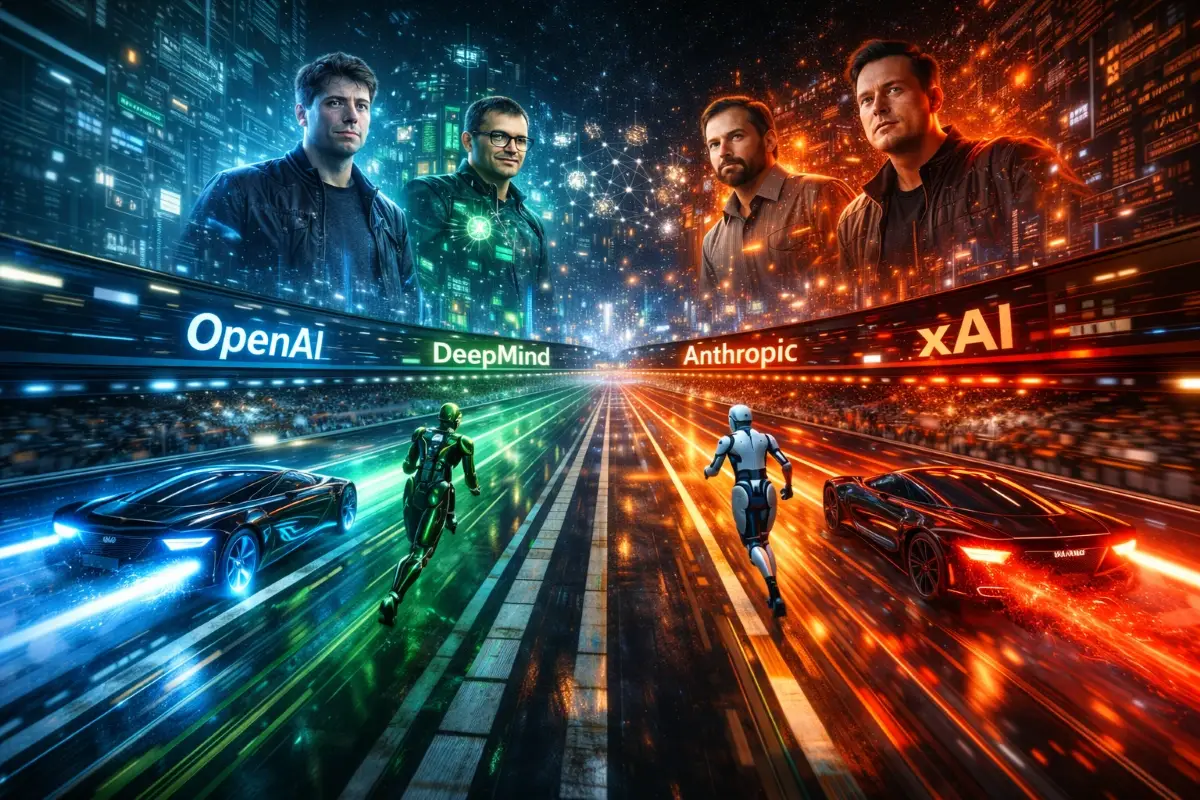
The Agentic AI Race Anthropic, DeepMind, Openai, and xai

For the better part of a decade, artificial intelligence was something you talked to. You asked it a question. It answered. The loop ended there. But somewhere between late 2024 and the early months of 2026, the paradigm broke — and what replaced it has set off the most consequential arms race in the history of the technology industry.

We have entered the era of agentic AI: autonomous systems that don’t just respond, but plan, execute, iterate, and adapt — often without a human in the loop. The implications are staggering. The competition is fierce. And the four labs at the center of it — OpenAI, Google DeepMind, Anthropic, and xAI — are pursuing profoundly different visions of what this future looks like.

This piece maps that competition: where each lab is strong, where the real battles are being fought, and what the next two to five years are likely to bring. If 2016 was the year deep learning entered the mainstream, 2026 is the year autonomous AI leaves the lab and begins reshaping the real economy.

What Is Agentic AI — and Why Does It Matter Now?

Traditional AI systems are reactive. You provide an input; they return an output. Every interaction is stateless, bounded, and human-initiated. An agentic AI system operates under an entirely different logic: given a high-level goal, it decomposes that goal into subtasks, selects and uses tools, monitors its own progress, and corrects course when things go wrong — sometimes over hours or days, entirely on its own.

The difference is not incremental. It is categorical. A chatbot that drafts an email is a tool. An agent that manages your inbox, schedules your meetings, researches your counterparts before a negotiation, and sends follow-up messages on your behalf is a colleague — a digital one operating at computational speed, without fatigue, and at scale.

Three capabilities define the agentic frontier: planning (breaking complex goals into executable steps), tool use (calling APIs, running code, browsing the web, reading and writing files), and iteration (evaluating outputs, identifying failures, and trying again). When all three converge reliably in a single system, something qualitatively new becomes possible.
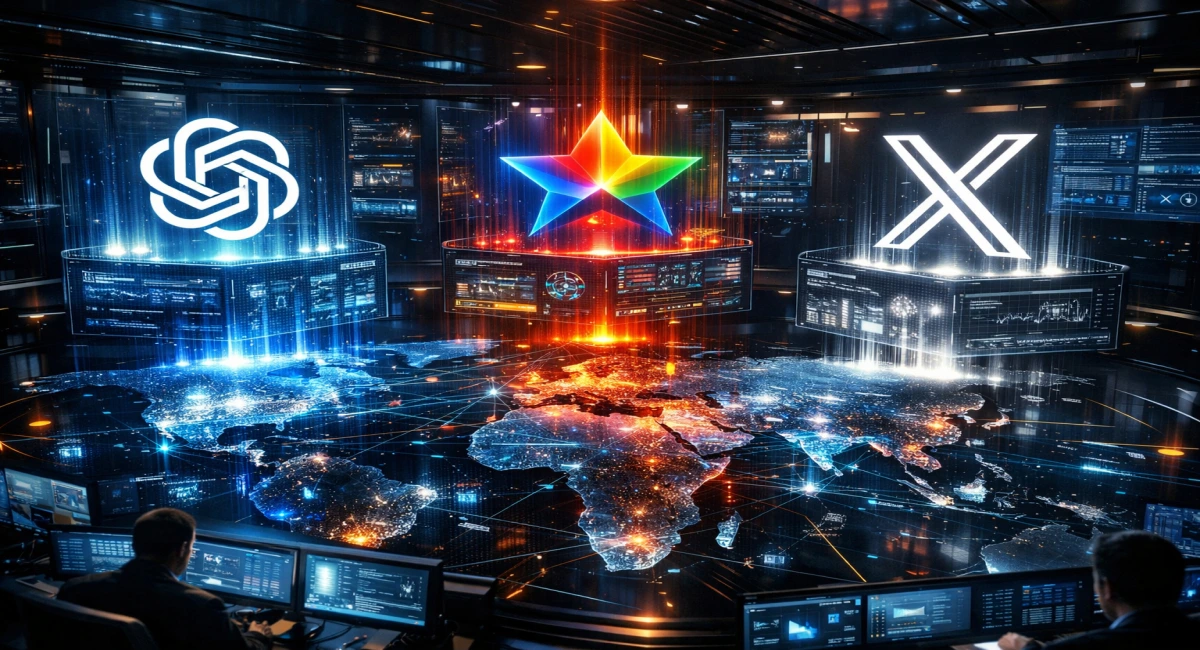
Businesses are beginning to feel this shift. Developer surveys from early 2026 show that agent-based architectures now account for more than a third of new AI deployments in enterprise settings. Autonomous coding agents, research assistants, and customer-support pipelines are moving from pilot programs to production infrastructure. The race to own this infrastructure — to be the platform on which the agentic economy runs — is what drives the four labs explored below.

The Key Players in the Agentic AI Race

The competition is not monolithic. Each of the four major labs brings a distinct strategy, a different set of advantages, and a different theory of how autonomous AI will ultimately win. Understanding those differences is essential to understanding the race itself.

1. OpenAI: San Francisco

OpenAI’s strategy is fundamentally a product strategy. Since GPT-4, the company has moved aggressively to translate research advances into deployable systems — Assistants, function-calling APIs, Operator, and the broader GPT ecosystem of plugins and integrations. Its agentic bet is on general-purpose agents: systems flexible enough to handle virtually any task a knowledge worker might perform. The developer ecosystem is deep, the API surface is broad, and iteration cycles are among the fastest in the industry.

Strength: Developer adoption & velocity

2. Google DeepMind: London

DeepMind brings something no other lab can replicate: Google’s infrastructure. Gemini-powered agents sit inside Search, Workspace, and Android — giving DeepMind distribution that others must spend billions to acquire. Its multimodal capabilities (text, image, video, audio, code) are among the most sophisticated available. The research pipeline is deep, the compute advantage is real, and the data moat — built on decades of indexing the web — is substantial.

Strength: Infrastructure & data scale

3. Anthropic: San Francisco

Anthropic was built by researchers who believed that capability and safety were not in tension — they were the same problem. The Claude model family reflects that philosophy: Constitutional AI, alignment-focused training, and enterprise-grade reliability. Claude’s agentic capabilities are deployed with careful guardrails, and the company’s trust-first positioning has resonated powerfully in regulated industries: finance, healthcare, legal, and government. Safety is not a constraint on Anthropic’s ambition. It is the product.

Strength: Enterprise trust & alignment

4. xAI: Austin

Elon Musk’s xAI entered the field later but moved fast. Grok’s integration with the X (formerly Twitter) platform gives it something unique: real-time access to one of the world’s largest unfiltered information streams. xAI positions itself as a challenger to “politically correct” AI — a truth-seeking system willing to engage where others hedge. Bold, often controversial, and deeply integrated into the X ecosystem, Grok is competing less on research depth and more on positioning, speed, and the loyalty of a specific user base.

Strength: Real-time data & X ecosystem
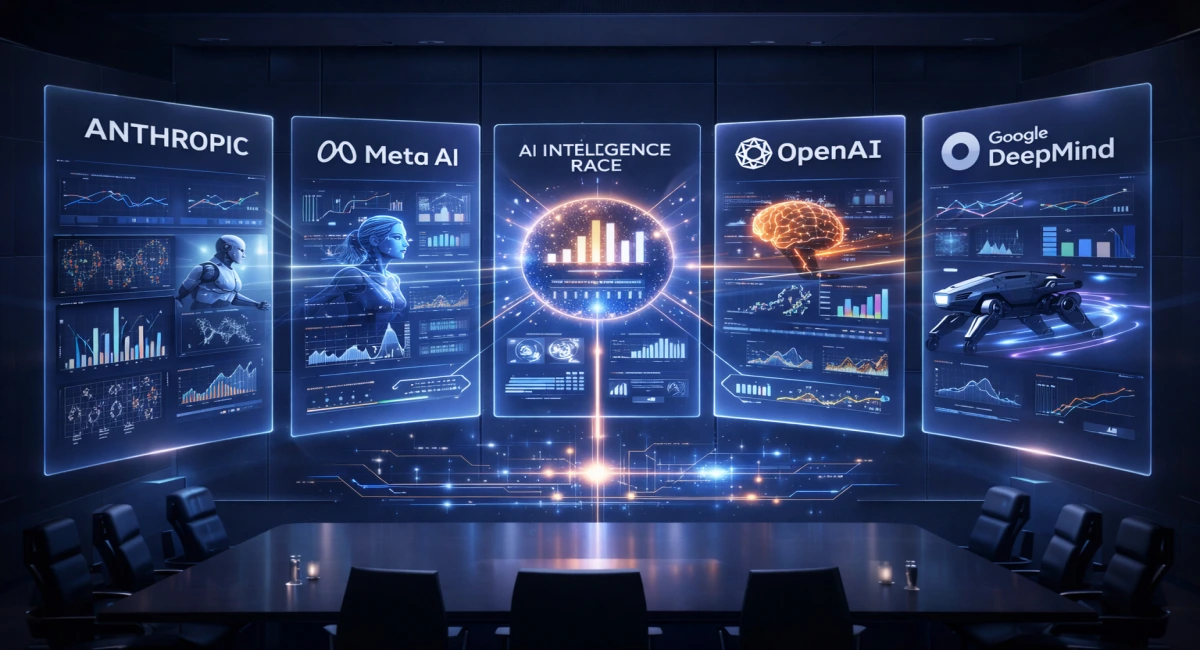
Core Battlefields Where Competition Is Heating Up

The agentic AI race is not fought on a single front. It is a simultaneous competition across five distinct dimensions — each of which will determine a different aspect of long-term dominance.

1. Autonomous Task Execution

Which system can reliably complete a multi-step task — book a flight, file a report, debug and ship code — without human intervention? OpenAI’s Operator and Anthropic’s computer-use capabilities in Claude are the current frontrunners, but no lab has solved reliable long-horizon autonomy at scale. This remains the central problem of the field.

2. Multimodal Intelligence

The real world is not text-only. Agents that can see, hear, read code, and interpret complex documents are dramatically more capable than text-only systems. DeepMind leads on multimodal breadth; OpenAI is close behind. Anthropic and xAI are catching up. The agent that can truly perceive and act across modalities will have an enormous capability advantage.

3. Developer Ecosystems

Agents need infrastructure: APIs, SDKs, orchestration layers, memory systems, and tool libraries. The lab that becomes the default platform for building agents — the way AWS became the default for cloud — will capture enormous long-term value. OpenAI leads on ecosystem breadth; Anthropic’s Claude API is growing fast among enterprise developers. Google has the deepest existing developer relationships.

4. AI Safety and Alignment

Autonomous systems that act in the world create new categories of risk. An agent that misinterprets a goal, takes irreversible actions, or is manipulated through adversarial inputs poses real dangers. Anthropic has built its brand around this problem. OpenAI and DeepMind have safety teams but face constant pressure to ship quickly. xAI has been more skeptical of safety constraints. How this tension resolves will shape not just products but regulation.

5. Data Advantage and Distribution

Data is the oil that powers agentic AI — and not all data is equal. Google’s web index, real-time search data, and Gmail/Drive corpus give DeepMind a unique advantage. X’s firehose gives xAI something others cannot buy. OpenAI has Microsoft’s enterprise data relationships. Anthropic competes on quality and curation rather than raw scale. Distribution — getting agents in front of users who generate new data — will compound these advantages over time.

“The company that wins the agentic race will not necessarily be the one with the smartest model. It will be the one that earns — or inherits — the right to act autonomously on behalf of users, enterprises, and governments.”

Strategic Differences That Define Each Company

Beyond product specifics, each lab embodies a distinct philosophy — a theory of how you win a technology race of this magnitude. Those philosophies are increasingly visible in how they hire, what they publish, and where they invest.

LabCore BetTrade-off
OpenAIProduct velocity and developer lock-in. Ship fast, iterate in public, build the ecosystem before competitors arrive.Risk of deploying systems before alignment is fully understood; reputational exposure when things go wrong.
DeepMindResearch depth plus distribution. Let Google’s existing infrastructure carry agents to billions of users without requiring independent go-to-market.Organizational complexity; research culture can conflict with the pace of commercial AI.
AnthropicSafety and reliability as the primary differentiator. Win the enterprise by being the lab that regulators and CISOs trust.Slower iteration cycles; risk of being outflanked by more capable but less cautious competitors.
xAIContrarian disruption. Challenge assumptions about what AI should and shouldn’t say. Win a loyal base through bold positioning.Limited institutional credibility; smaller research team; dependency on the trajectory of X as a platform.

Real-World Use Cases Driving the Competition

The agentic AI race is not abstract. It is being fought in specific deployment contexts where the economic stakes are enormous. Understanding where agents are already displacing traditional workflows helps clarify why the competition is so intense.

AUTONOMOUS CUSTOMER SUPPORT
Agents that handle tier-1 and tier-2 support without human escalation, resolving complex multi-turn issues across voice, chat, and email simultaneously — at a fraction of the cost of human teams.
AI-POWERED SOFTWARE DEVELOPMENT
Coding agents that plan features, write code, run tests, identify bugs, and submit pull requests. Not copilots — autonomous systems completing entire development tickets end-to-end.
AUTONOMOUS RESEARCH ASSISTANTS
Agents that conduct literature reviews, synthesize findings across dozens of sources, generate hypotheses, and produce structured reports in hours — tasks that previously consumed weeks of analyst time.
ENTERPRISE DECISION SUPPORT
Agents that sit inside enterprise systems — ERP, CRM, analytics platforms — and surface actionable recommendations, draft communications, and flag anomalies without waiting to be asked.

The pattern across every use case is the same: agentic AI is not augmenting workflows, it is replacing them. This is not a productivity improvement — it is a structural transformation of how organizations deploy cognitive labor.

Who Is Leading the Agentic AI Race in 2026?

There is no single leader. The honest answer — which the hype rarely acknowledges — is that different companies lead on different dimensions, and those dimensions matter differently depending on what you’re building or buying.

COMPANY CURRENT STRENGTH SHORT-TERM OUTLOOK MOMENTUM
OpenAI Developer mindshare, agent frameworks, broad API ecosystem Maintains lead in consumer and developer markets; under pressure in enterprise
DeepMind Multimodal capability, infrastructure, built-in distribution Gemini integration deepens across Google surfaces; research pipeline strong
Anthropic Enterprise trust, safety track record, reliability Fastest-growing enterprise AI company; Claude 4 series raising the bar on capability
xAI Real-time information, bold positioning, X platform integration Growing user base but significant gaps in enterprise capability and trust

The long-term picture is murkier. OpenAI’s head start in ecosystem development is a durable advantage, but history suggests that platform races can be won late by those who get distribution right. Google’s integration advantages compound with time. Anthropic’s enterprise positioning becomes more valuable, not less, as regulatory scrutiny of autonomous AI intensifies. And xAI remains an unpredictable variable — capable of bold pivots in ways that established players cannot match.

The Future of Agentic AI Competition

Where does this race lead? The broad trajectory is clear, even if the specific outcomes are not. Here is a reasonable view of the next two to five years.

2026 — NOW
The Infrastructure Layer Takes Shape
APIs, orchestration frameworks, memory systems, and agent-building tools are solidifying. This is the year developers choose which platforms they will build on — and those choices will be sticky. OpenAI and Anthropic are competing most aggressively here.
2027 — NEAR
Digital Workers Enter the Mainstream
Autonomous AI agents begin handling entire job functions in specific domains — legal research, financial analysis, software QA, content moderation — not as tools augmenting human workers, but as digital colleagues with defined scopes and escalation protocols.
2028 — MEDIUM
Regulatory Frameworks Mature
Major jurisdictions implement frameworks for autonomous AI in high-stakes domains. Labs with mature safety infrastructure — primarily Anthropic and DeepMind — benefit. Labs that prioritized speed over alignment face compliance friction that redistributes market share.
2029–2031 — HORIZON
Possible Consolidation or Specialization
The market is unlikely to support four major general-purpose agent platforms at enterprise scale. Expect either consolidation through acquisition, or a move toward vertical specialization — with different labs dominating different sectors rather than competing head-to-head across all of them.

Underlying all of this is a structural shift of historic proportions. SaaS businesses built on recurring human cognitive labor will face pressure from agents that perform the same tasks more cheaply and at greater scale. Freelance knowledge work — writing, research, coding, design — will be disrupted in ways that parallel how manufacturing was disrupted by automation. Enterprises that move early on agent infrastructure will build compounding advantages over those that wait.

The agentic AI race is not ultimately a race about models. It is a race about who controls autonomous intelligence — who gets to act on behalf of users, enterprises, and institutions in the digital economy. That is a question of distribution, trust, infrastructure, and governance as much as it is a question of technical capability.

OpenAI has the ecosystem. DeepMind has the scale. Anthropic has the trust. xAI has the boldness. Each advantage is real. None is decisive. The competition will not produce a single winner — but it will produce a new economic order, one where the ability to deploy reliable, safe, autonomous AI becomes as fundamental as the ability to run software in the cloud.

Agentic AI is the next internet-scale shift. The labs that define its infrastructure will shape how work, software, and businesses operate for the next generation. The race is already underway — and it is accelerating.

Final Thought’s

The agentic AI race is not ultimately a race about models. It is a race about who controls autonomous intelligence — who gets to act on behalf of users, enterprises, and institutions in the digital economy. That is a question of distribution, trust, infrastructure, and governance as much as it is a question of technical capability.

OpenAI has the ecosystem. DeepMind has the scale. Anthropic has the trust. xAI has the boldness. Each advantage is real. None is decisive. The competition will not produce a single winner — but it will produce a new economic order, one where the ability to deploy reliable, safe, autonomous AI becomes as fundamental as the ability to run software in the cloud.

Agentic AI is the next internet-scale shift. The labs that define its infrastructure will shape how work, software, and businesses operate for the next generation. The race is already underway — and it is accelerating.

Scroll to Top